5 Sewing Machine Repair Essentials for Home Fixes, and When to Book a Service in 2026
As an Amazon Associate, this website earns from qualifying purchases.
The short answer
Most sewing machine problems trace back to a stale or wrong needle, incorrect threading, or lint in the bobbin area. A pack of needles, a lint brush and a small screwdriver fix most of them; book a service for grinding, burning smells or errors.
Sewing machine repair often turns out to be a five-minute fix. A thread nest, a row of skipped stitches or snapping thread can make a machine seem broken. But most of these come from the needle, the threading, the bobbin or lint.
Five cheap tools handle almost every home fix, so they come first. Below them, a table matches each problem to its likely cause and full guide. It also shows when to book a repair service instead.
If you are choosing a machine rather than fixing one, compare the dated manufacturer-spec feature census before returning to our reviewed machine guides.
#1. SINGER universal needles: best first fix for skipped stitches
Keep in mind: not for knits; use ballpoint or stretch needles there.
Product details checked September 2026
A dull, bent or wrong-size needle causes more skipped stitches and snapped thread than anything else. A mixed pack of universal needles in sizes 80/12, 90/14 and 100/16 covers most woven fabric. Change the needle first whenever stitches go wrong. Our sewing needle size chart matches sizes to fabric.
Keep in mind: a brush only; you still need a screwdriver to lift the needle plate.
Product details checked September 2026
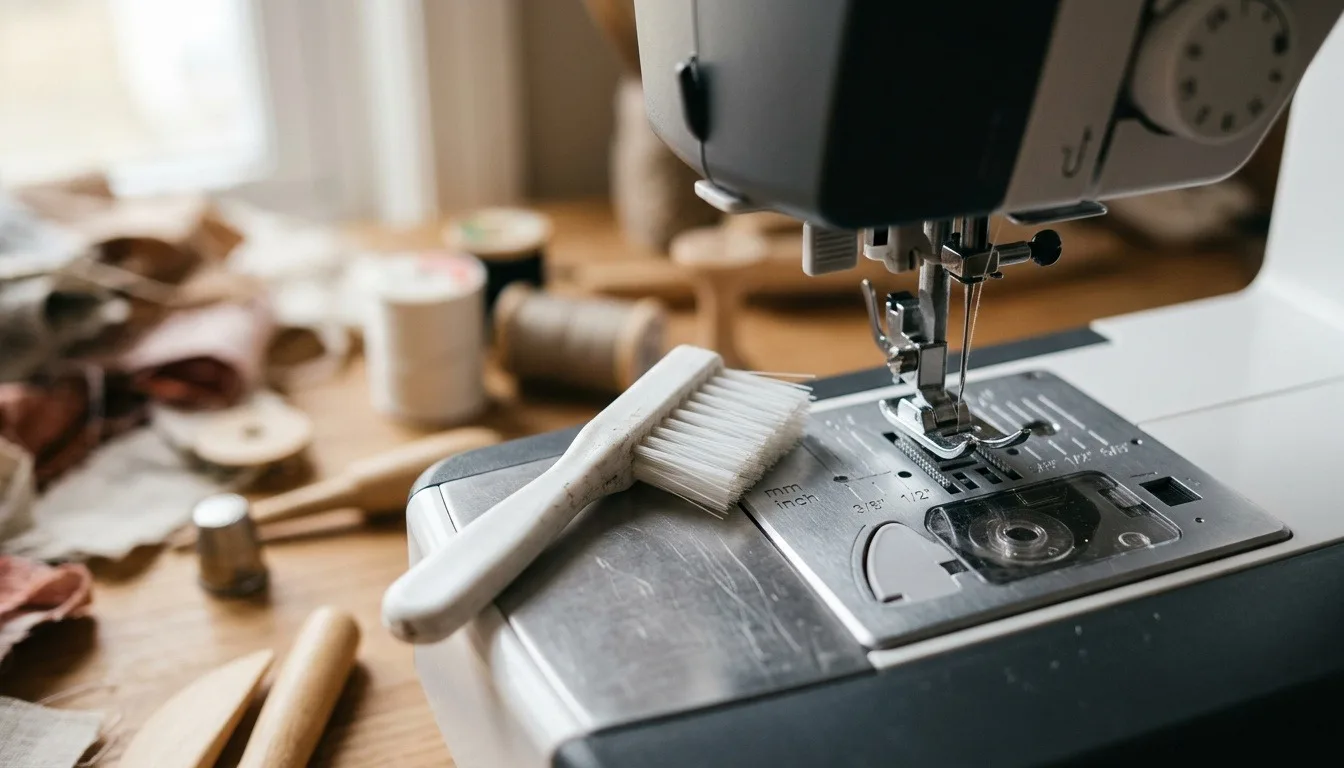
Lint packed under the needle plate and around the bobbin case causes jams, feed trouble and uneven tension. A small, dense brush clears it after every project or two. It works on sergers too.
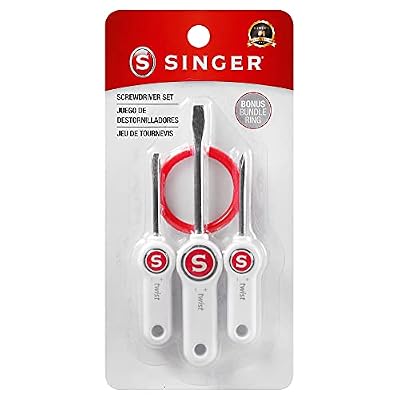
#3. SINGER 3-piece screwdriver set: best for lifting the needle plate
One Phillips and two flat head screwdrivers on a ring
Sized for sewing machine maintenance, such as the needle plate
Plastic handles for grip
Keep in mind: for routine cleaning only; timing and motor work belong with a repair shop.
Product details checked September 2026
Most machines need a small screwdriver to take off the needle plate. Only then can you clean the feed dogs and bobbin area well. This set has one Phillips and two flat head screwdrivers sized for sewing machines. Keep home work to the cleaning and part swaps the manual describes.
#4. SINGER sewing machine oil: best for machines that need oiling
Keep in mind: many newer computerized machines are sealed and should not be oiled at home; follow your manual.
Product details checked September 2026
A dry machine can run noisy or stiff. If your manual shows oiling points, use sewing machine oil there and nowhere else. Many newer machines are sealed. You should not oil those at home, so check the manual first.
Keep in mind: confirm the bobbin class in your manual first; near-fits cause jams.
Product details checked September 2026
A cracked or near-fit bobbin causes loops and jams, plus tension trouble. Spare bobbins in the exact class your machine takes rule that out. This pack holds 50 clear Class 15 bobbins. Check your class in the manual first. See sewing machine bobbins for other types.
Factors to consider when choosing sewing machine repair tools
Match the manual. The needle system, bobbin class and whether the machine takes oil all come from your manual. A near-fit part causes new problems.
Buy for the symptom. Skipped stitches point to the needle first, jams and feed trouble to lint, and noise to oiling. Our symptom table below matches each one.
Keep it to routine care. Needles and cleaning are home jobs. So are oiling and bobbins. Timing, motor and circuit board faults belong with a repair shop.
Replace often. Needles are cheap and wear out. Many sewists fit a new one at the start of each larger project.
Start with the home checks. Fit a new needle. Rethread fully with the presser foot raised. Use the right bobbin, clean the bobbin area and go back to default settings. Our step-by-step guide to fix a sewing machine walks through them in order.
Is a repair quote close to the price of a new machine? Compare replacements by the sewing you plan to do in our sewing machines guide.
FAQ
How do I know if my problem is the machine or how I've threaded it?
Re-thread the machine completely, top and bobbin, following the manual's path exactly, and test on scrap fabric before assuming the machine itself is faulty. Threading mistakes cause the majority of early problems.
How often should I change my needle?
Roughly every 8 hours of sewing, or immediately after sewing through a pin, whichever comes first. A dull or bent needle is the single most common cause of skipped stitches.
When is it time to take the machine to a repair shop?
If you've re-threaded correctly, changed the needle, and cleaned the bobbin area and the problem persists, or if you hear a grinding or clicking noise, it's time for a professional service.