5 Best Sergers for Beginners and How to Choose One in 2026
As an Amazon Associate, this website earns from qualifying purchases.
The short answer
The Brother 1034D is the common first serger. Pick the Juki MO-50E if threading worries you, and wait on any serger until you sew knit fabric regularly or want a store-bought seam finish.
Sergers, also called overlockers, come up early for anyone who sews knits or clothes. A serger trims and sews a seam edge in one pass, wrapping it in thread. That is the clean finish you see inside store-bought clothes. Each of these five widely sold home sergers suits a first machine for a different reason.
We have not tested these machines. We compared maker specifications and exact retailer packages, checked anonymous US purchase controls, and ranked the choices by first-project fit. A beginner overlocker is the same type of machine as a beginner serger. Below the picks, you will find whether you need one yet, how to choose and every serger guide on the site.
Comparing regular sewing machines too? Our beginner machine feature census links directly to manufacturer specifications; use the machine finder to narrow the reviewed options by project.
#1. Brother 1034D: first serger for everyday knits
Keep in mind: the needles and loopers still need threading in the correct order.
Product details checked September 2026
Start here when you want to finish garment seams without paying for a second stitch system. Brother lists three- and four-thread operation, differential feed and a built-in rolled hem. Those are useful functions for ordinary knit seams and finishing woven edges, rather than a long decorative-stitch menu.
Treat the color coding as a guide, not automatic threading. Leave time to follow the manual and practice on scraps before cutting into a garment. It cannot make a coverstitch hem or replace buttonholes and zippers on your sewing machine. Our Brother 1034D review explains that division of work.
Lay-in tensions and an automatic lower looper threader
Adjustable differential feed
Built-in rolled hem
Keep in mind: it offers three- and four-thread sewing, not a two-thread setting.
Product details checked September 2026
The MO-50E is worth comparing when threading is the obstacle keeping you from buying a serger. Its listed lower-looper threader addresses a particular step in setup; it does not thread every path for you. Lay-in tensions, differential feed and rolled hemming cover the core jobs of a first overlocker.
Follow the specified thread order and test the seam with the same fabric and thread as the project. This is a beginner overlocker for seam construction and edge finishing, with no coverstitch mode. Choose the b44 below instead if a two-thread stitch is an essential part of your planned work.
15 built-in stitches, including rolled hem and flatlock
Differential feed for knits and fine fabric
Up to 1,300 stitches per minute, per the maker
Keep in mind: its color-coded paths still require manual threading.
Product details checked September 2026
The b44 adds two-thread operation to the three- and four-thread choices found on the first two picks. Bernette lists 15 stitches, differential feed, rolled hems and flatlock. Choose it for a wider range of edge finishes, rather than because a larger stitch count promises better seams.
It remains a dedicated overlocker. A flatlock seam is not the same thing as a coverstitch hem, and the threading paths need attention even with color coding. Begin with a four-thread seam and the manual's starting settings, then learn the specialty finishes one at a time. Keep your sewing machine for construction jobs this serger cannot do.
Keep in mind: it finishes edges but cannot sew a coverstitch hem.
Product details checked September 2026
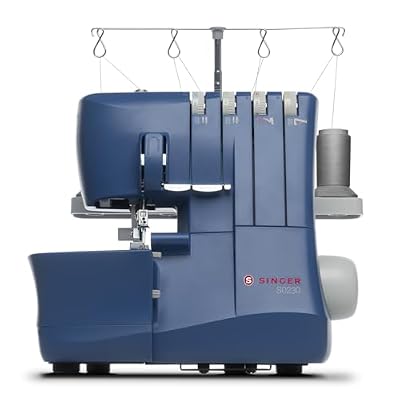
The S0230's free arm is the useful distinction if cuffs, sleeves and smaller garments are on your project list. SINGER lists two-, three- and four-thread settings, differential feed and color-coded threading. Its rolled-hem capability gives you another finish to learn after basic seams.
Do not pick it on maximum speed alone. For a beginner, knowing where the knife will cut and guiding the fabric steadily matters more. Practice around a tube on scrap fabric before finishing a sleeve, and keep seam allowances clear of the blade. The free arm helps position work; it does not remove the need for careful setup.
Keep in mind: it has no two-thread setting or coverstitch hem.
Product details checked October 2026
Brother describes the ST4031HD as a three- and four-thread serger with a metal frame and a hard steel blade. That makes it a relevant alternative for a sewing room handling heavier garment fabric, but it is still a home serger with material limits. The linked package includes a six-pack of sewing thread; it is not a bare-machine listing.
Test the actual seam stack before starting a denim garment. More layers and crossing seams change the job, even if each fabric layer is manageable. Our overlocker sewing machine guide puts the machine alongside other domestic options. For the finest two-thread finishes, compare the b44 or S0230 instead.
Factors to consider when choosing a serger
Thread options. 3 and 4-thread stitches cover most seams. A 2-thread option adds the finest rolled hems and flatlock.
Threading help. Color-coded thread paths and a lower looper threader make the first setup far easier.
Differential feed. It stops knit seams from stretching out or puckering. Every pick above lists it.
Free arm. Useful for sleeves and cuffs, and for small garments.
Frame and blade. A metal frame and a hard blade help on heavier fabric.
Coverstitch is a separate job. None of these sergers sews a coverstitch hem. See coverstitch vs. serger if that is what you need.
If you have never used a serger, you may expect it to feel like a sewing machine. It doesn't, at first. It takes a session or two to get used to the many thread paths. The blade cuts as you sew, and the fabric feeds in a new way.
A machine built for beginners shortens that phase more than anything else. Look for color-coded threading and a clear tension chart in the manual. Snap-on presser feet help too, so you aren't fighting the machine while you learn it. Best Beginner Overlocker compares models against exactly those points.
Should you buy one yet
Skip it for your first few projects if you're mostly working with wovens like quilting cotton, canvas, or most home-decor fabric. A regular sewing machine's zigzag or overcast stitch finishes those edges well enough.
Consider one once you're sewing knit fabric regularly, or you want the clean, store-bought-looking finished edge on garment seams that a serger gives you.
A combination coverstitch/serger machine is worth the extra cost only after you know you'll use both stitch types. See coverstitch vs. serger if you're unsure which you need.
If you sew mostly quilts, bags or home decor, a serger is a nice-to-have rather than a requirement. A walking foot on a regular sewing machine often matters more for those projects.
What a serger actually does
A serger feeds two to four spools of thread through loopers and needles at once. In one pass over the fabric edge, it trims the extra seam allowance and sews the seam. It also wraps thread around the raw edge so it can't fray.
A sewing machine can't do all that in one step. You would sew the seam first. Then you would finish the edge with a zigzag stitch, pinking shears or a serger.
The result is a seam that holds together and doesn't fray in the wash. That matters most on knit fabric, which would otherwise curl and unravel at a raw edge. Woven fabric frays more slowly. That is part of why a serger feels optional for quilting cotton but close to essential for jersey knit or activewear.
Serger vs. the machines it gets confused with
Machine
What it's for
Replaces a sewing machine?
Learning curve
Serger / overlocker
Trims, seams and finishes an edge in one pass; best on knits
No
Steeper first attempt, easier after
Coverstitch machine
Flat, stretchy hems (think t-shirt hems)
No
Similar to a serger
Combination serger/coverstitch
Both jobs, one machine, higher price
No
Two threading systems to learn
Regular sewing machine
Buttonholes, zippers, topstitching, general construction
-
Lower for straight/zigzag work
Scroll for more →
None of these machines fully replaces another. Most home sewists who take up making clothes end up owning a sewing machine and a serger. They add a coverstitch machine only once hemming knits becomes a regular task.
What to expect the first week
New serger owners complain most about threading, not the machine itself. A serger runs 3 or 4 thread paths through loopers at once, not just a bobbin. So the first setup takes longer than anything a sewing machine asks of you. Set aside a real session for your first threading, not five minutes.
Expect to check the manual's chart more than once. Beginner machines usually color-code each thread path to make this easier. Check for that feature before you buy. Sergers and Overlock Machines covers it.
Once it is threaded, sew a test seam on a scrap. Use fabric from your project if you can, not a random cloth. That tells you whether the tension and stitch width are right before you sew a real seam. Sergers for Beginners walks through that first test seam in detail.
A quick readiness checklist
Before you shop, it helps to know which group you fall into:
You sew mostly wovens (quilting cotton, canvas, linen). A sewing machine with a zigzag or overcast stitch covers seam-finishing well. A serger is a convenience, not a requirement.
You sew knit fabric occasionally (a t-shirt a season). A serger speeds things up and gives a cleaner finish, but a sewing machine's stretch stitch and a little patience get you through.
You sew knit fabric regularly, or you're building a garment-sewing habit. This is where a serger earns its cost quickly: seams go faster, and the finished edge holds up to washing far better than a zigzag-finished knit seam.
You want ready-to-wear-looking hems on knit garments specifically. That's a coverstitch job, not a serger job. See Coverstitch, Explained before you shop for either machine.
Then go to Best Beginner Overlocker once you are ready to shop. Overlock finishes seam edges; coverstitch makes stretchy hems without trimming the edge. Read the guide for the stitch you want to make when those terms are unfamiliar.
If something's already gone wrong
Loose loops, skipped stitches and puckered seams usually mean a threading or tension issue, not a broken machine. Start with Sergers for Beginners for the most common early mistakes. The sewing machine troubleshooting guide also explains threading and tension checks that can help with a serger.
The best beginner overlocker buying guide compares beginner serger models side by side on the features that matter for a first machine.
What does a serger do that a sewing machine can't?
It trims, seams and finishes an edge in one pass using multiple thread loops, which is what gives knit-fabric seams their stretch and a clean, professional-looking edge finish.
Can a serger replace my sewing machine?
No. A serger can't sew buttonholes, zippers or topstitching the way a regular machine does. Most sewists who own one use both machines together.
Is threading a serger really as hard as people say?
It has a steeper first attempt than a sewing machine because of the multiple thread paths, but most beginner-labeled sergers have color-coded threading guides that make it manageable within a session or two.
How is a serger different from an overlocker?
They're the same machine under two regional names. Serger is the common US term; overlocker is the common UK and Australian term.