
Machine Problems
Bobbin Tension on a Sewing Machine
The short answer
Bobbin tension sewing machine adjustments should come last, after top-thread re-threading and a fresh needle have already been ruled out. It's a small, easy-to-overdo adjustment.
Last updated September 2026
What's covered10
- What bobbin tension actually controls
- The drop test
- When to actually adjust it
- Common mistakes with bobbin tension
- If the bobbin case seems damaged
- Buying a second bobbin case for specialty threads
- Signs the problem isn't bobbin tension at all
- How to adjust bobbin tension on a sewing machine, step by step
- Bobbin tension on a sewing machine: symptoms at a glance
- Related reading
Bobbin tension on a sewing machine is the setting most fix-it guides tell you not to touch first. There is a good reason. It is a smaller, touchier setting than top tension.
It is easy to overdo. And it is rarely the real cause of a problem that looks like tension. This guide covers how bobbin tension works, how to test it without guessing and when it really is the right thing to change.
What bobbin tension actually controls
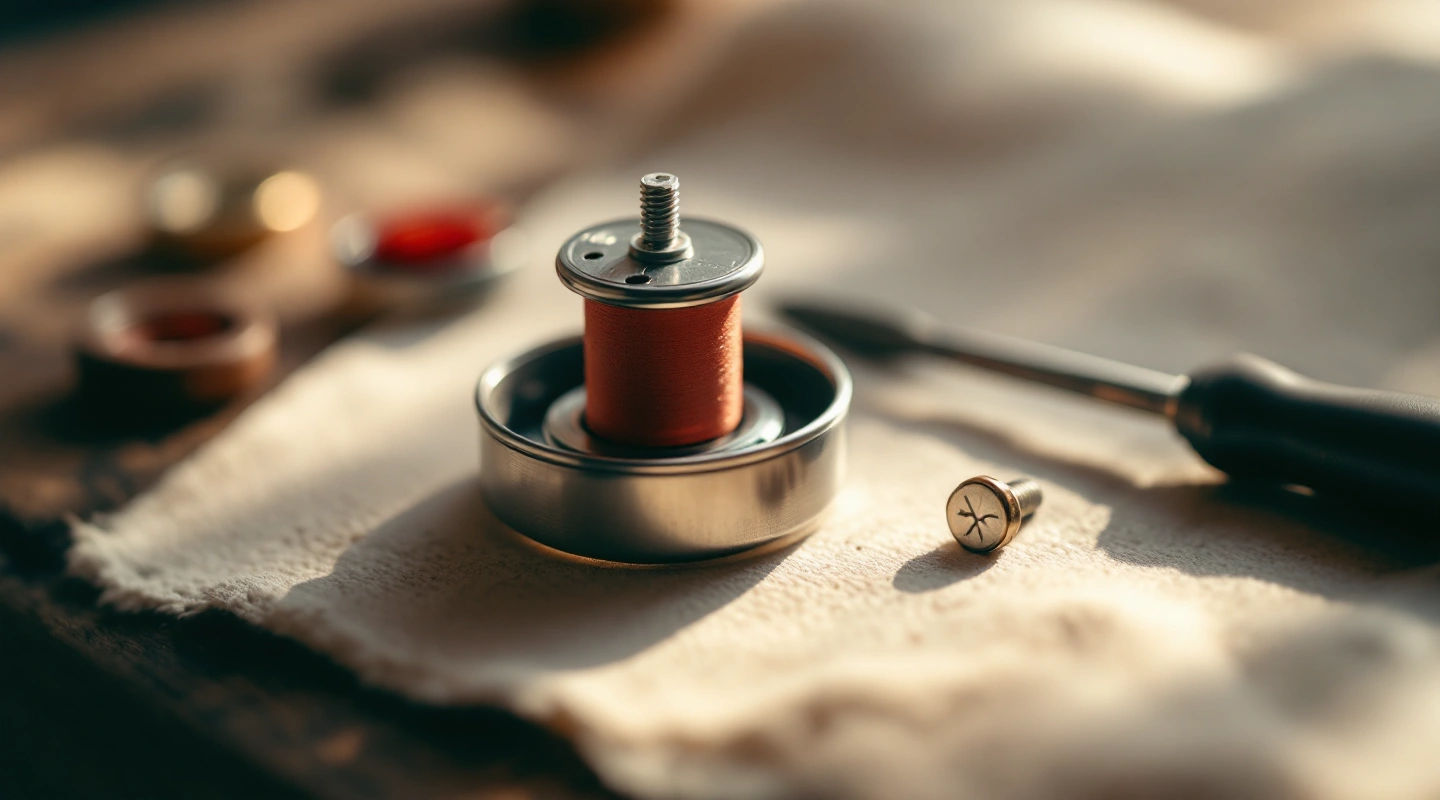
The bobbin case holds a small spring that presses on the bobbin thread as it feeds out. It works like the top tension discs, but on a much smaller scale. On most bobbin cases, a tiny screw sets how hard this spring squeezes the thread. The screw has a small range, so even a slight turn makes a clear difference. That is why you treat it as a last resort, not a first fix for stitch problems.
The drop test
The usual way to check bobbin tension without tools is the drop test. Put the bobbin in its case as normal. Hold the case up by its thread tail and give the thread a gentle bounce. A well-set case drops an inch or two in a controlled way and then holds.
If it falls to the floor, the tension is too loose. If it doesn't move at all, the tension is too tight. This gives you a quick read before you sew a test seam.
When to actually adjust it
Reach for the bobbin tension screw only after other fixes fail. First rethread the top thread, fit a fresh needle and check the top tension dial. If the underside of the stitches still looks uneven, and the drop test shows the bobbin tension is off, then turn the screw a little. Turn it a quarter turn or less at a time. Repeat the drop test after each small change, before you sew a real test seam.
Common mistakes with bobbin tension
- Adjusting it as a first response to any stitch problem, when threading or the needle is far more often the actual cause.
- Turning the screw too far in one attempt, since the adjustment range is small and a large turn can overshoot dramatically.
- Losing track of the original setting. Some sewists mark the screw's starting position with a small dot of nail polish or similar before adjusting, so they can identify and return to the factory setting if needed.
- Adjusting bobbin tension on a drop-in bobbin system that isn't designed for user adjustment, which can cause more problems than it solves; check your manual first.
If the bobbin case seems damaged
A bobbin case that has been dropped may not hold even tension, however carefully you set the screw. The same goes for one that shows wear or has a bent spring. New bobbin cases cost little next to a repair shop visit. Try a fresh one before you assume a bigger fault, most of all on an older machine.
Buying a second bobbin case for specialty threads
Some sewists keep a second bobbin case just for special threads. That might be a decorative or heavier bobbin thread used for some quilting or embroidery work. Then they don't have to keep turning the screw on their main case back and forth between projects. A second case costs little next to the time it saves. It also means your everyday bobbin setting never gets disturbed for the odd special project.
Signs the problem isn't bobbin tension at all
Bobbin tension is a well-known term, so it is tempting to blame it whenever the underside of a seam looks wrong. But other bobbin issues can look just like a tension problem, with the screw not involved at all. The bobbin may be wound unevenly, too loose or with thread piled over itself.
It may face the wrong way. Or the case may not sit fully in the machine. Rule out how the bobbin is wound and placed before you assume the screw needs a change.
How to adjust bobbin tension on a sewing machine, step by step
Only do this on a removable bobbin case, and only after the drop test shows the case is off.
- Mark the start. Put a tiny dot of nail polish or a marker line on the screw head and the case, so you can return to the factory position.
- Hold the case over a towel. The screw is small and easy to lose.
- Turn in tiny steps. Clockwise tightens, counterclockwise loosens. Think of a clock face and move about five minutes at a time.
- Repeat the drop test. The case should slide down a little with a gentle bounce and then stop.
- Sew a test seam. Check both sides of the fabric with thread colors that contrast.
Bobbin tension on a sewing machine: symptoms at a glance
| What you see | Bobbin tension may be | Check first |
|---|---|---|
| Top thread pulled flat to the underside | Too tight | Top tension set too loose |
| Bobbin thread showing on top of the seam | Too loose | Top tension set too tight |
| Bobbin thread pulls out of the seam easily | Too loose | Bobbin wound loosely |
| Bobbin thread snaps | Too tight | Burr or lint in the bobbin case |
Scroll for more →
The "check first" column matters. Each of these can also come from the top thread, and the top thread is easier to fix.
Related reading
Sewing Machine Thread Tension covers the fuller picture of top and bobbin tension. Sewing Machine Bobbin Thread Tension looks at symptoms that trace back to the bobbin side.
FAQ
How do I check bobbin tension?
The drop test: hold the bobbin case by its thread with the bobbin inserted, and gently bounce it. Correctly tensioned, it should drop an inch or two and stop; if it free-falls, tension is too loose, if it doesn't drop at all, too tight.
Should I adjust bobbin tension myself?
Only after ruling out top-thread threading and needle issues, and only in very small increments using the small screw on the bobbin case, consulting your manual first since it's easy to overdo.
Does every sewing machine have adjustable bobbin tension?
Most do, via a small screw on the bobbin case, but some machines use a drop-in bobbin system with limited or no user-adjustable bobbin tension. Check your manual before assuming yours is adjustable.