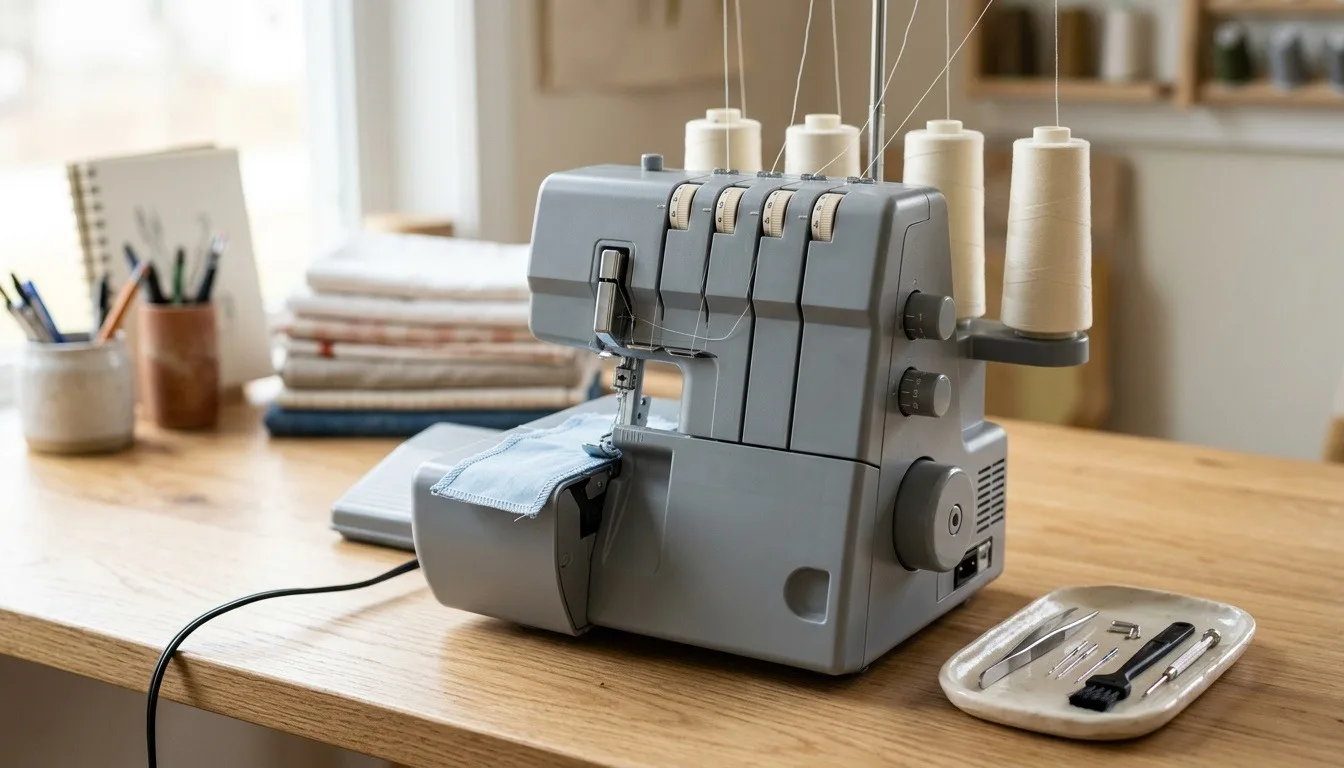
4 Starter Picks for Sergers and Overlock Machines, Plus the Accessories You Need in 2026
As an Amazon Associate, this website earns from qualifying purchases.
The short answer
Buy serger-specific needles and cone thread; skip the accessory bundles most beginner machines are sold with until you know which specialty feet you'll actually use.
Buying sergers and overlock machines is the start of a small, ongoing run of accessory buys, not a single purchase. You use up thread and needles, and you add special feet over the machine's life. Knowing what is worth buying early and what can wait saves money. It also keeps tools you won't touch for months out of your sewing space.
#1. SINGER S0100: best ready to sew out of the box
Keep in mind: one color per pack, so add cones for contrast work.
Product details checked September 2026
For thread, most beginners start with a few large cones of polyester serger thread, such as a 4-pack of Maxi-Lock all-purpose cones. Our serger thread guide compares more options.
Factors to consider when choosing a serger and its first accessories
Pick the machine first. Then buy accessories that match it. Check which needle system and cone size the manual lists. Those two details decide which needles and thread stands will fit. A spare set of needles and a small cleaning brush cover the first months.
Then add these basics:
Serger-specific cone thread in a couple of neutral colors to start (see Serger Thread for what to actually look for).
A spare set of needles in your machine's specified system, since sergers run at higher speeds than sewing machines and needles wear out faster.
Tweezers, for guiding thread through the loopers during setup, nearly every serger manual recommends this and it's rarely included.
A small lint brush, usually included with the machine but worth having a backup of, since lint clearing is a routine maintenance step.
A dedicated waste bin or tray positioned under the knife area, since a serger produces a steady stream of trimmed fabric scraps as you sew.
What you can skip at first
Beginner sergers often come with a box of special presser feet. You may get piping, gathering, elastic and blind hem feet. Most of these only earn their place once you use a certain technique often. Learn threading and basic seams on the standard foot first.
Then work through the rest of the box. The same goes for sets of decorative thread in every color. A couple of neutral cones cover most early projects. You can buy matching thread for a project once you know what you are making.
Maintenance basics for sergers and overlock machines
Sergers collect lint around the loopers faster than sewing machines do, because they trim as they sew. Use a small brush, which usually comes in the box. Clear the lint after each project. That keeps tension and stitches even.
Most stitch complaints come from lint or old needles, not the machine itself. Oil the machine on the manual's schedule if your model needs it. Not every modern serger does. Check first, so you don't harm a model that oils itself.
Storage and workspace setup
A serger throws off more lint and thread bits than a sewing machine. So put it somewhere you can vacuum or sweep around easily. That makes regular use much less of a chore.
A small table or cart of its own also saves real time. It lets you keep the machine threaded between projects. Rethreading from scratch every session is the biggest hassle for new owners.
Building a basic accessory kit over time
You don't need to buy every accessory up front. A better approach is to add special feet and tools as projects call for them. Get a blind hem foot when you start hemming clothes.
Get a piping foot when a project needs piped trim. Get an elastic foot once you sew knit waistbands often. That keeps early spending on the machine and thread, not on tools that may sit in a drawer for months.
A simple first-month accessory budget
If you are setting a rough budget for accessories with a new machine, buy in this order. Start with a spare set of needles and two to four cones of all-purpose thread. Add tweezers, and a small lint brush if one isn't in the box.
Everything else can wait: special feet, decorative thread, a storage cart. A real project or a repeat annoyance will tell you what to buy next. That keeps early money on the items that decide whether your first projects go smoothly.
Recognizing when an accessory is actually needed
Before you buy any serger accessory, ask one question. Is a current project held back without it? Don't ask whether it looks useful in general.
A blind hem foot only matters once you hem a garment that needs an invisible hem. A piping foot only matters once a pattern calls for piped trim. Buying as real projects need things tends to build a more useful kit than buying everything at the start.
Keeping sergers and overlock machines' accessories organized
Once you own a few special feet, needles in a couple of sizes and a few cones of thread, keep them in a simple labeled box or drawer insert. Then you can find the tool a project needs. Losing a special foot is a common reason sewists buy the same one twice.
Serger feet are small and easy to lose among other sewing supplies. Keep your serger accessories apart from your sewing machine ones, even in the same room. Over time, that cuts down a lot on wasted, repeat buys.
Can I use regular sewing machine thread in a serger?
You can, but serger cone thread is cheaper per yard for the volume a serger uses and is designed to run smoothly through multiple thread paths at once.
Do I need special needles for a serger?
Most sergers use standard household needles, but check your specific machine's manual, some models specify a particular needle system, and using the wrong one causes skipped stitches.
Are the bundled specialty feet worth using?
Some are (a blind hem foot is genuinely useful once you're hemming garments), but most beginners use a fraction of what comes in a bundled accessory kit. Learn the machine on its standard foot first.