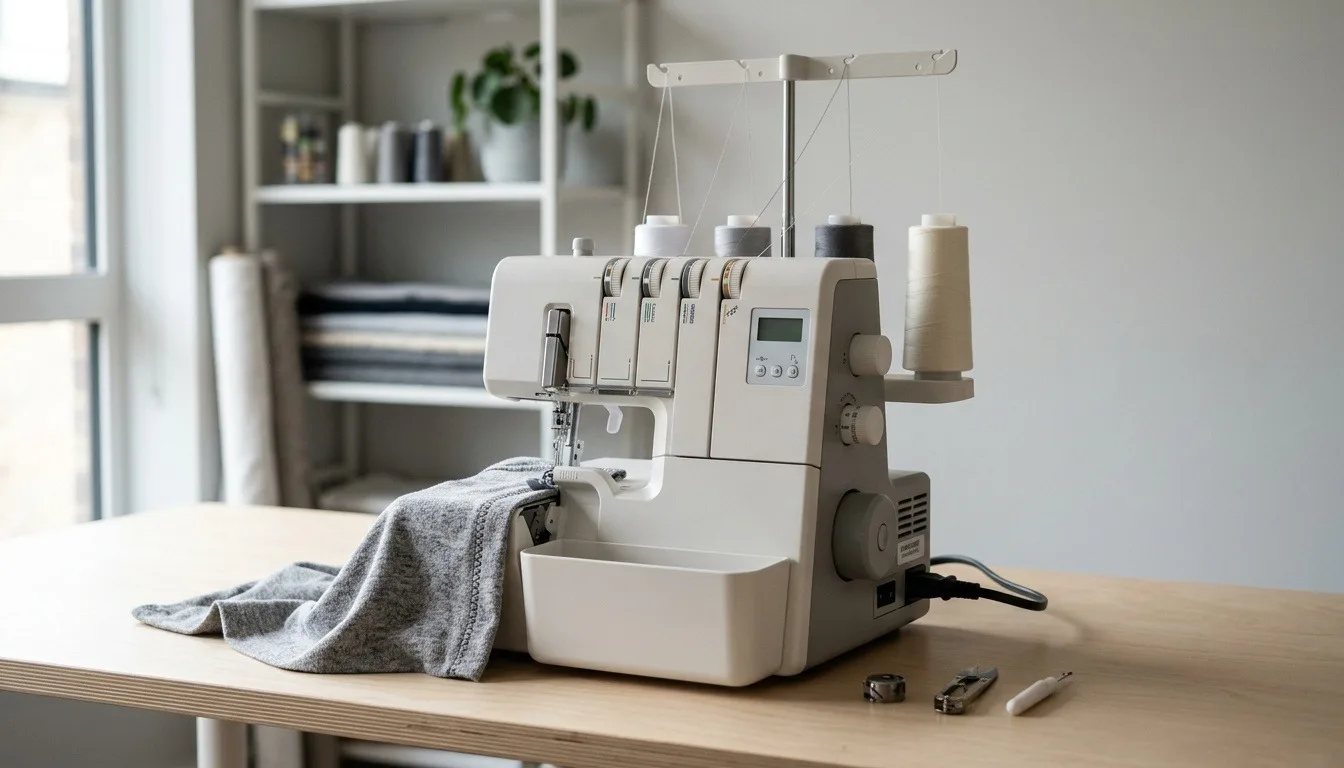
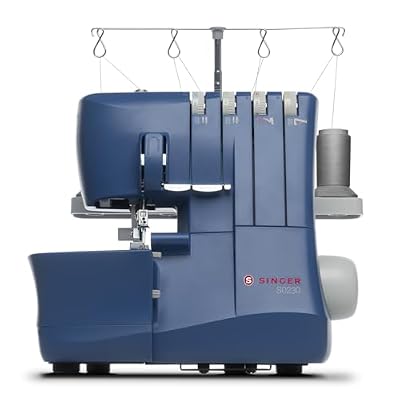
An overlocker sewing machine, also called a serger, trims, sews and wraps a seam edge in one pass. This guide names four widely sold home models first. Then it explains which features matter when you choose one, so the spec sheet makes sense.
#1. Brother ST4031HD: best sturdy 3/4-thread choice
Factors to consider when choosing an overlocker sewing machine
Most ads for an overlocker sewing machine lead with the stitch count. But other features shape how it feels to use every day:
Thread count flexibility. A 3/4-thread machine covers both light seams (3-thread) and sturdier construction seams (4-thread) without buying a second machine.
Differential feed. This adjusts how fabric feeds through relative to the stitching, which prevents wavy seams on knits and puckering on lightweight wovens. Skip it only if you're certain you'll stick to stable, woven fabric.
Color-coded threading guide. Since you're threading 3-4 separate paths, a clearly color-coded path is the difference between a 10-minute rethread and a 40-minute one.
Snap-on presser feet. Interchangeable feet that snap on without tools make it realistic to actually use specialty feet (blind hem, piping) instead of avoiding them.
A stable, low-vibration base. Sergers run faster than sewing machines, and a lightweight or wobbly base makes that speed feel less controlled, especially on a first machine.
What matters less on an overlocker sewing machine than it looks like
Most listings lead with the total stitch count. But a beginner uses only 3 or 4 stitches for a long time, such as two overlock widths and a rolled hem. So don't let a big stitch count decide for you. Storage for parts, a carry handle or a case are nice to have. They should not outweigh the core features above.
Questions worth asking before you buy
Does the manual and threading diagram look clear, or does it assume prior serger experience?
Are needles and presser feet for this specific model easy to find, or is it a less common system?
Is there a demo video from the manufacturer showing the actual threading process, not just a features overview?
What's the manufacturer's warranty and service network like in your area, since sergers occasionally need professional tension calibration?
How this compares to shopping for a sewing machine
If you have already chosen a sewing machine, some of this will feel familiar. You put ease of use and a sound build ahead of a long feature list. The big difference is threading. A sewing machine has one top thread and a bobbin.
A serger has 3 or 4 threads that run through loopers. So threading design matters much more on a serger. Give it more weight here than you would when you buy a sewing machine.
Setting up a new machine for the first time
Before your first project, sit with the manual's threading chart and the machine side by side. Don't try to learn it by heart first. Thread one path at a time, in the order the manual gives. Don't skip a step, even if it looks obvious. On a serger, order matters more than on a sewing machine.
Later threads often have to catch or wrap around earlier ones. Once it is threaded, sew a test seam on a scrap. Check that the stitch looks even on top and underneath. Check that the fabric feeds through without bunching.
A note on used and secondhand overlockers
A used serger can get you a good machine for less. Check a few things first. Ask the seller to show it sewing a clean test seam. Look at the blade to see that it is sharp and not damaged.
Make sure a manual, or a copy you can download, is available. Without one, a beginner will find a serger much harder to thread. If the machine has not been serviced in years, it may need a tune-up at a shop. That matters most if the test seam shows tension or feed trouble.
Comparing entry-level and mid-range models
Entry-level overlockers cover the basics: 3 and 4-thread stitches, differential feed and hand threading. They cost less than mid-range models. Mid-range models often add easier threading, sometimes with air. They may also offer a wider stitch width or more special stitches.
For a first machine, the basic features are usually enough to learn on and finish real projects. The upgrades mostly save time at setup. They don't unlock anything a beginner needs on day one.
Where to go from here
Best Beginner Overlocker compares models against this checklist. Sergers and Overlock Machines covers the accessories worth buying with the machine. If you are still not sure you need one at all, start with What Is a Serger?. It sets out the case for and against buying one before you look at models.
FAQ
Is a 3-thread or 4-thread overlocker better for a beginner?
A machine that can do both (a 3/4-thread overlocker) gives you the most flexibility. 3-thread for lighter seams and rolled hems, 4-thread for sturdier seams on garments that see more stress.
What is differential feed and do I need it?
Differential feed controls how fast the fabric moves under the machine relative to the cutting/stitching action. It matters most on knit and stretchy fabric, preventing wavy or puckered seams, worth having if you'll sew knits regularly.
Do beginner overlockers come pre-threaded?
Some do, and it's a genuinely useful feature for a first machine, since threading is the steepest part of the learning curve. Check this specifically if threading intimidates you.