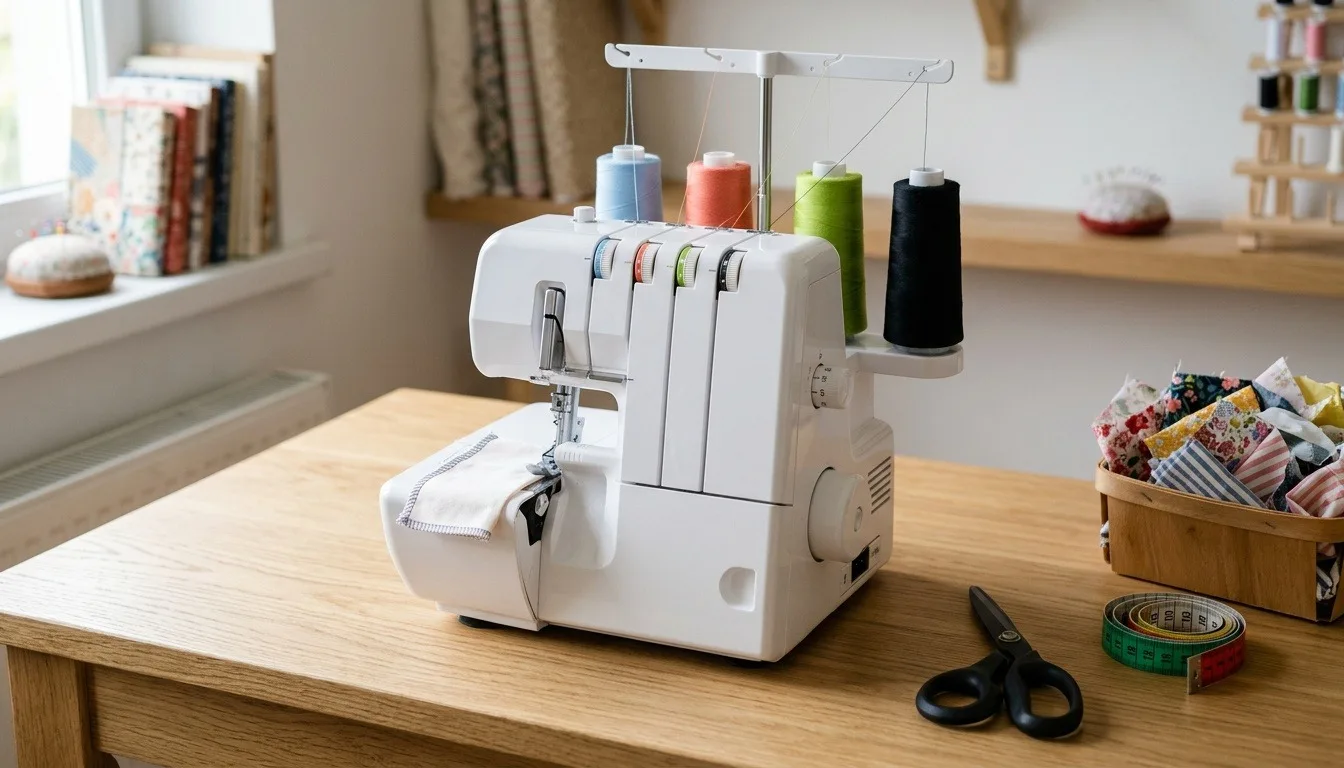
Brother 1034D Serger Review: Features, Limits and Who It Suits in 2026
As an Amazon Associate, this website earns from qualifying purchases.
The short answer
The 1034D is a reasonable first serger for beginners who want 3/4-thread flexibility and differential feed without a steep learning curve - its main limitation is a manual needle threader rather than an automatic one.
This review looks at the Brother 1034D serger because it is the model that comes up most in beginner serger advice. It explains why that reputation holds up, and where it doesn't.
What the Brother 1034D serger is
The Brother 1034D is a 3 and 4-thread serger. It finishes edges and hems on many fabrics, from wovens to stretch knits. It also does decorative touches like rolled hems and ribbon lock stitching. It is one of the most widely stocked beginner sergers. That is part of why it shows up in so many buying guides.
Brother 1034D serger specifications (per Brother's published product information)
Feature
Detail
Thread configuration
3/4-thread
Maximum stitching speed
1,300 stitches per minute
Stitch options
4-thread overlock, 3-thread overlock, narrow hem, rolled hem, ribbon lock
Differential feed
Yes
Threading
Color-coded upper thread guides; lower looper threading system
Keep in mind: no 2-thread stitch and no automatic looper threading.
Product details checked September 2026
What it does well
Threading is genuinely easier than average, thanks to the color-coded guide system - this is the single feature that determines whether a beginner's first week with a serger is frustrating or manageable.
Differential feed helps prevent the wavy or puckered seams that are common when running stretchy fabric through a serger without it.
Snap-on presser feet make it realistic to actually use the included specialty feet rather than avoiding them because swapping is a hassle.
Where it falls short
Threading is manual, not automatic - some higher-priced models offer air- or lever-assisted threading that removes even more of the setup friction, at a higher cost.
No coverstitch capability - it's overlock-only, so hemming a knit garment flat still needs either a twin-needle setting on a sewing machine or a separate coverstitch machine. See Coverstitch vs. Overlock if that's part of your project plan.
What a first week with this machine looks like
Setting up the 1034D the first time works like any serger. Work through the manual's threading chart one path at a time. Use the color-coded guides to keep the order straight. Many first-time owners say threading takes real, focused time on the first try.
It gets much faster by the second or third time. Most beginner sergers work the same way. Sew a test seam on scrap fabric before a real project, as you would on any serger. Check the tension and stitch width against your project fabric before you start.
Who this machine suits well
The 1034D suits a beginner who wants a plain, simple start with serging. You don't pay for automatic threading you may not need yet. It suits you less if you want coverstitch in the same machine. It also suits you less if you would pay more up front to avoid hand threading. For a first machine that only finishes seams, it covers the basics without extra fuss.
Ongoing maintenance
Like any serger, the 1034D needs regular lint clearing around the loopers. The trimming knife makes fabric scraps as it sews. Change the needles more often than on a sewing machine, since the machine runs faster.
Brother's manual gives the care schedule and the right needle system for this model. Read it before your first real project. Don't wait until a bad stitch shows up in the middle of a seam.
How it compares
See Best Beginner Overlocker for how the 1034D compares with the Bernette 44 Funlock, the Juki MO-50E and the SINGER S0100. It also covers what to look for when you choose between beginner models. Check current pricing and availability with the retailer before buying.
FAQ
Is the Brother 1034D good for a total beginner?
Yes - its color-coded threading guides and snap-on presser feet are specifically aimed at making the first setup manageable, which is the steepest part of learning any serger.
What stitches can it make?
According to Brother's published specifications: 4-thread overlock, 3-thread overlock, narrow hem, rolled hem, and ribbon lock stitches.
Does it have differential feed?
Yes. Brother's product information describes differential feed as part of the 1034D's design, intended to improve stitch quality and reduce puckering on thin or stretchy fabric.