3 Best Serger Threads and What to Buy First in 2026
As an Amazon Associate, this website earns from qualifying purchases.
The short answer
Buy serger cone thread, not standard sewing-machine spools. It's cheaper per yard for the volume a serger consumes and feeds more smoothly through multiple thread paths.
Serger thread comes on large cones. A serger feeds three or four threads at once and uses far more thread per seam than a sewing machine. Below are three widely sold serger threads.
After them, you will find what to look for when you buy serger thread for the first time. Details come from each listing. We have not tested them.
Keep in mind: a smaller put-up; you need several spools for a 4-thread setup.
Product details checked September 2026
A smaller spool. Useful when a project needs just one color.
Factors to consider when choosing serger thread
Loopers (the threads that wrap the edge): these use the most thread and are often less visible in the finished seam, so a budget all-purpose cone thread is a reasonable choice here.
Needle threads: more visible, especially on rolled hems or decorative stitches, worth matching more closely to the project or using a slightly higher-quality thread.
Consistency over price matters more than brand: uneven thread thickness is a common cause of skipped stitches and tension trouble on a serger.
Woolly nylon or texturized thread for rolled hems specifically, since it fills the stitch more fully and gives a softer, more finished-looking edge than standard thread.
Serger thread: cone vs. spool
Normal sewing thread comes on small spools. They feed one thread path at a time. Serger thread, also called cone thread, comes on much larger cones. It is usually a little finer and more even.
It is made to run smoothly through 3 or 4 thread paths at once without snagging in the loopers. You can run spool thread on a serger with a cone adapter. But you will use up spools fast. Some spool thread is also thicker and less even, so it catches in the loopers more easily.
How much you actually need
A serger uses far more thread per seam than a sewing machine, because of the looping stitch. If you are just learning the machine and testing stitches, start with a set of four cones. Pick a couple of neutral colors, such as white, black or a color that matches your usual fabric.
You don't need a full range of colors right away. To give a rough sense of scale, the seams of one knit garment can use several times the thread a sewing machine needs. Each serger stitch wraps thread around the edge instead of passing through once.
Storing and organizing serger thread
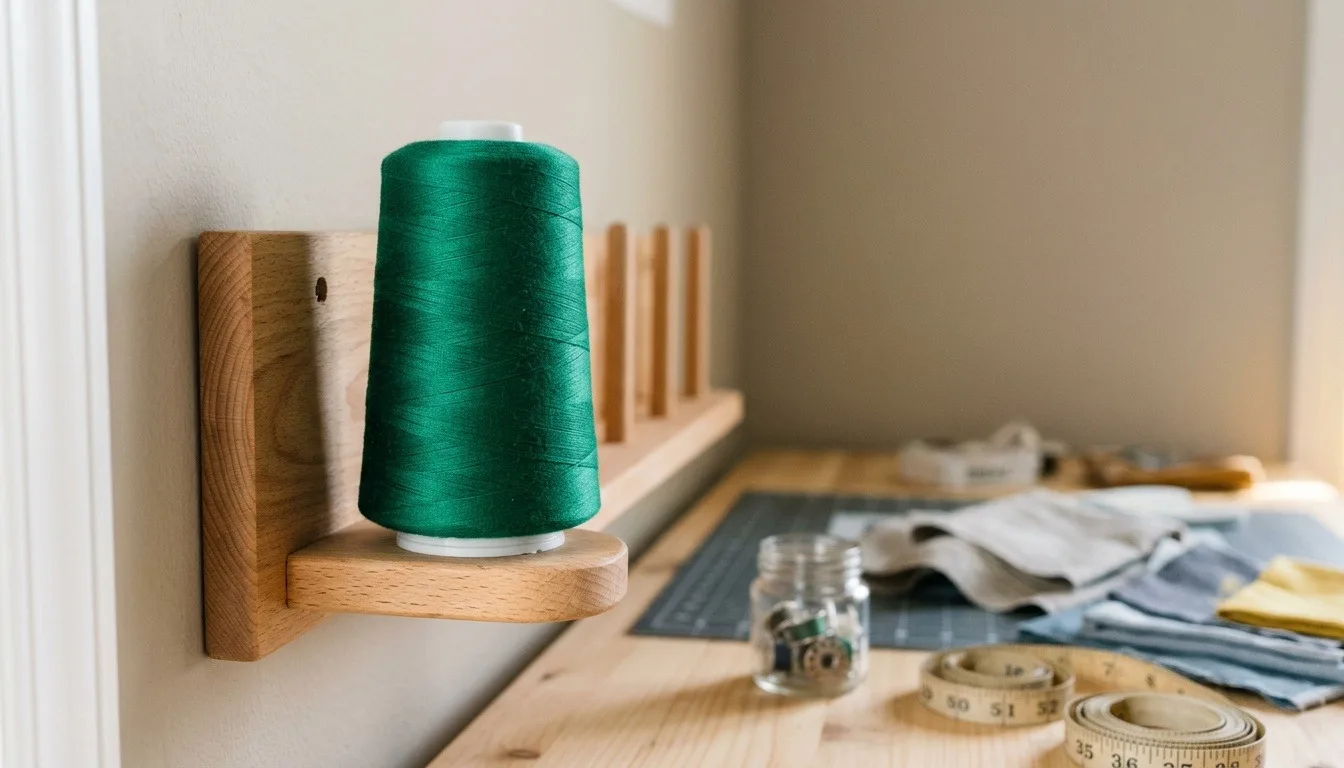
Cones take up more shelf space than spools, and they tangle if you store them loose. A thread rack or a set of small bins keeps cones upright. It stops their ends from catching on each other. That matters more than you might think.
A tangled cone can make the thread feed unevenly partway through a seam. Keep thread out of direct sun, too. That helps it keep its strength and color over time, most of all with cheaper all-purpose cones.
Reading a thread cone's label
Serger cones are labeled by weight and by fiber. The weight is a number for thickness. A higher number usually means a finer thread. Polyester is the most common all-purpose fiber.
Cotton and nylon versions exist for certain fabrics. For most beginner projects on knits or mixed fibers, an all-purpose polyester cone in a standard weight is a safe default. Try special threads once a project calls for them. Examples are a heavier thread for decorative rolled hems or a finer one for delicate fabric.
If you're having tension or skipping issues
Old or poor thread is a common, overlooked cause of serger tension problems. Before you change the tension dials, try a fresh cone of even thread. See Overlocker Sewing Machine for other setup basics to check first. See Fixing a Serged Seam if you need to unpick a seam that didn't come out right.
FAQ
Why does a serger need so much more thread than a sewing machine?
A serger uses 3-4 threads at once instead of 2, and its stitch wraps thread around the fabric edge rather than just running a single line through it, so it consumes thread much faster.
Can I mix thread brands or types on one serger?
Yes, and many sewists do, using cheaper thread in the loopers (which use the most thread and are less visible) and a slightly nicer thread in the needles.
Does thread color matter for all four threads?
Less than you'd think for the loopers, which are often hidden inside the seam. Needle threads are more visible, especially on a rolled hem, so matching those to your project matters more.