As an Amazon Associate, this website earns from qualifying purchases.
The short answer
Ask how the recipient will use and wash the quilt, then choose a simple layout and compatible materials. Test the layers together before quilting and inspect the finished gift after washing.
For a baby quilt gift, choose a manageable layout with sturdy seams and materials the recipient can wash easily. A small square-grid top lets you practice accurate cutting and straight seams while making a personal gift. Keep quilts and other loose bedding out of an infant's sleep space, following NIH safe-sleep guidance.
Ask about the recipient's preferred colors and intended use before buying fabric. Use the quilting guide to calculate yardage for the top, backing and binding, then check your tools against the pattern's cutting list.
Baby quilt planning: decide the use before the size
Ask the recipient how the quilt will be used and cared for. A quilt intended for supervised floor time has a different use than a wall display. Avoid choosing sizes only because a product is labeled “baby.”
Compare patterns and finished quilts by their width and length, since the word “baby” does not specify dimensions. For a finished quilt, also check the fiber content, washing directions and stitching around the edge.
If you are buying a finished quilt, inspect whether the care method suits the household. If making one, choose compatible materials with care directions you can pass along. A gift that needs unexpected special handling may be less convenient than a simpler piece.
For a nursery-themed project, compare the crib quilt guide. It separates size planning from sleep use so a decorative name does not decide where the quilt belongs.
Three supplies for making a simple baby quilt
These three supplies cover cutting, machine stitching and holding the binding. Choose the tool that fills a gap in your current setup.
Fiskars three-piece cutting set for a coordinated cutter, mat and ruler setup.
Aurifil cotton thread for machine piecing and quilting practice.
Clover Wonder Clips for holding the folded edge during binding.
Make a shopping list from the pattern: fabric for the top, backing and binding, plus batting sized for your quilting method. Compare any cutting set's contents with the tools you already own before ordering. Keep the pattern nearby so you can check that the ruler and mat fit its longest cuts.
Keep in mind: check the mat and ruler sizes against the longest cuts in your pattern.
Product details checked October 2026
The Fiskars set includes a 45 mm rotary cutter, a ruler and a folding cutting mat. That makes it relevant when the whole cutting station is missing. If you already own suitable tools, keep using them and buy only what your project needs.
Lay out the pattern's longest cut on your work surface before choosing a set. A large top does not mean every patch is large. Long borders or binding strips may still need more room. Follow the tool maker's instructions for cutting and storage.
Keep in mind: the dove color may show strongly on very dark or bright fabrics.
Product details checked October 2026
Aurifil offers this 50-weight cotton thread in Dove. The neutral color can keep the supply list simple, but test it against the actual top and backing. A color that blends into cream may become a visible line on navy.
Use the needle and settings appropriate to the thread and machine. Test through the complete layers before quilting the project. Follow the batting fabric guide when choosing the filling and reading its spacing instructions.
Keep in mind: remove each clip before it reaches the machine needle.
Product details checked October 2026
This 50-piece pack of assorted-color Clover Wonder Clips has flat bases and guide markings. Use the clips to preview the fold around the edge before sewing. They are holding tools; the binding still needs a complete stitched finish.
A small set of clips you already own may be enough for a short working section. You do not need to clip the entire perimeter at once. The binding overview helps you choose hand or machine finishing before cutting strips.
Plan a 30-by-42-inch square-grid gift quilt
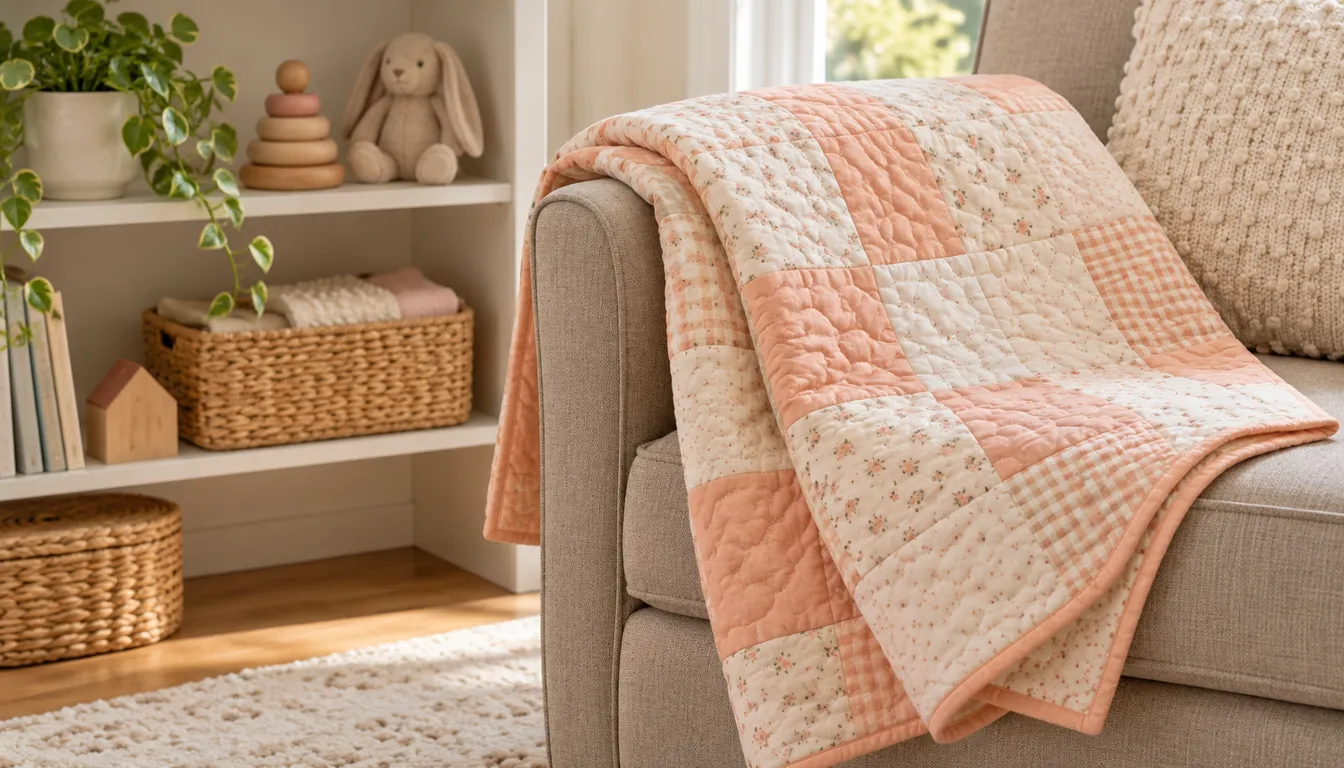
For a square-grid example, use five squares across and seven down, each finishing at 6 inches. The planned top is 5 × 6 = 30 inches wide and 7 × 6 = 42 inches long, before quilting and washing.
Cut 35 squares at 6 1/2 inches for 1/4-inch seams. If using five fabrics equally, each supplies seven squares. Lay them out before joining so the same print does not gather in one area by accident.
Assume a measured usable fabric width of 40 inches. One 6 1/2-inch strip yields six squares because six cuts use 39 inches. Each fabric must supply seven squares, so you will need a second strip from each. Work out those cuts before buying, and save the extra squares for samples or another project.
Adjust the number of rows and columns if the recipient needs a different size. Recalculate the square count before cutting. Compare the square and bar layouts in baby quilt patterns, which also links to publishers' project collections.
Choose care before adding decoration
Read the fabric, thread and batting care directions together. Pick a washing method that suits all three materials. Keep the batting packaging until the quilt is finished so its quilting and washing instructions remain available.
Keep the design simple. Fabric contrast and quilting texture can provide the decoration without adding separate pieces to the surface. Inspect every seam and edge before gifting, and remove all pins, clips and loose threads.
Wash the completed quilt according to its materials if that is part of your gift plan. Inspect it again afterward. Record the final sizes rather than promising the exact pre-quilting top size.
Give the quilt with useful details
Include the materials and care directions in a short note. Describe the intended use clearly, such as supervised floor time or a keepsake. Add the finished dimensions so the recipient can plan where to use or display it.
If you are still choosing equipment for making the gift, compare beginner quilting machines. Start with the pattern and the time you have. Use your current machine if it sews the tested layers well.
Verdict on a baby quilt
A baby quilt makes a useful handmade gift when its use, care and sewing are clear. Choose a manageable layout, use supplies that suit the cuts and seams, and inspect the finished edge. Give yourself time to wash and dry the quilt according to its materials' directions, then pack it with a care note.
FAQ
Can a baby sleep with a quilt in the crib?
NIH guidance says to keep quilts and other loose bedding out of an infant's sleep area. Plan a handmade quilt for supervised use, display or a keepsake instead. Give the recipient the intended use and care details with the gift.
What size should I make for a baby quilt gift?
Ask how the recipient will use it, then choose dimensions to suit. The example here makes a 30-by-42-inch top before quilting and washing. Measure the completed quilt for the gift note, since the final size may be smaller.
Do I need all three listed tools to start?
Buy only for a task your current setup cannot do. Suitable cutting tools, thread and clips you already own may work. Select the pattern and layers first, then test the seam and quilting stitch before replacing supplies.