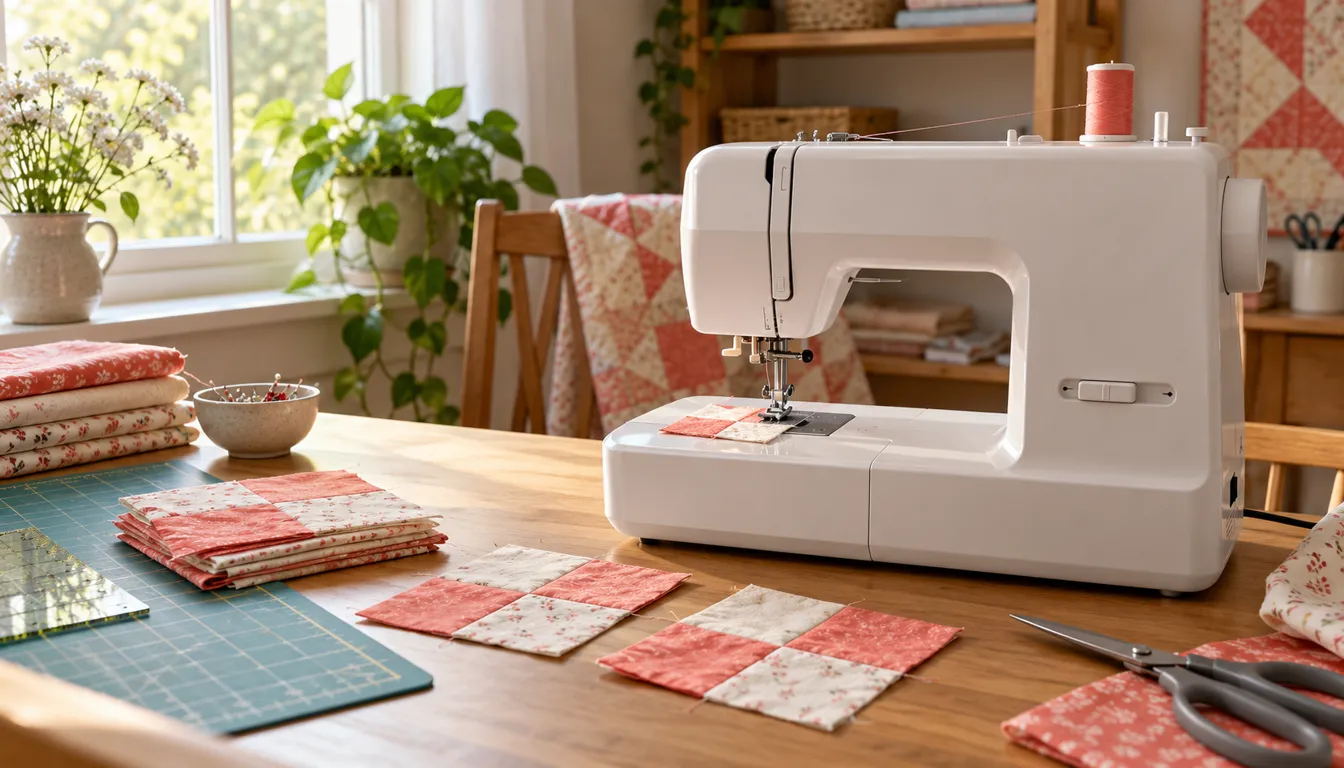
For your first quilt, look for a domestic machine with clear threading instructions, speed you can control and space to rest the fabric. Check that it also has the stitches you need for clothes or repairs. A small patchwork project lets you learn those controls one at a time.
Use the quilting guide to choose your first project before shopping. A small patchwork top asks less of the room and your hands than a bed quilt. That makes it a better way to learn which machine features matter to you.
Beginner quilting machines: build a short list
Start with three questions. Will this be your only sewing machine? Will it stay on a desk or travel to class? Do you want simple stitch selection or a broader menu for later projects? Write down the answers before comparing bundles.
The three options below offer different ways to begin. During a trial, select a stitch, sew a seam and check how the fabric rests around the machine. Use the same materials for each trial so you can compare the results.
Brother CS7000X for a computerized first setup.
Brother XR3774 for a smaller stitch menu.
Brother CS7205 for mixed sewing interests.
For more models to compare, see the first-quilt machine buying guide. Bring a short project list to the trial so you can ask about the tasks you will learn first.
Choose controls you can learn and repeat
Compare a computerized setup with a smaller stitch menu using the same simple task. Select straight stitch, adjust it, then return to the starting setting. Try the controls yourself and keep the manual nearby.
Check the accessories in the exact package too. A useful foot or table can help with the first quilt, while extra supplies need a clear place in your project plan.
Linked bundle adds a carrying case, thread and needles
Keep in mind: the linked kit contains extras beyond the standard machine package.
Product details checked October 2026
The Brother CS7000X comes with a wide table, a walking foot and a quilting foot. With those accessories, you can learn to join a top and then try stitching its layers. Compare the linked kit's contents with the standard package before buying extra feet.
Set up one straight stitch first. Learn the threading path, bobbin and safe way to switch a needle from the manual. Save the extra stitch menu for a later sample. A beginner gains more from repeating a good seam than from trying every stitch on the first afternoon.
Linked bundle adds a carrying case, thread and needles
Keep in mind: confirm which feet and case come with the exact kit.
Product details checked October 2026
The XR3774 appears in Brother's sewing and quilting range with a wide table. Its smaller stitch menu may suit you if you prefer fewer choices while learning the controls. Try selecting a stitch and adjusting it before deciding whether that approach feels easier.
Ask for a trial of selecting a straight stitch, changing its settings and returning to the starting point. Then try it yourself. The point is to learn whether the controls make sense in your hands, rather than assuming that a dial or a screen is always easier.
LCD stitch selection and automatic needle threader
Keep in mind: extra stitch choices bring more settings to learn.
Product details checked October 2026
The Brother CS7205 offers buttonhole functions and comes with a wide table and accessory feet. It may suit you if your first projects include garments as well as quilts. Compare it with a simpler machine using the same basic seam test.
Decorative stitches do not replace practice with cutting, guiding and measuring the fabric. Choose the broader menu because you have a use for it, such as garment work or decoration, and keep the first quilt's stitch plan plain.
Learn the controls in a useful order
Begin with threading and winding the correct bobbin. Next, learn to raise and lower the foot, select straight stitch and stop where you intend. Then learn needle positioning and the machine's speed control if present. Follow the manual for each action.
Keep a small card beside the machine with the settings from your successful sample. Add a photo of the threading path if that helps you return to it. Leave service adjustments to the manual or a technician; a beginner practice session should not start with changing internal screws.
When you switch to a quilting foot, check the exact fit instructions. The phrase “fits domestic machines” is too broad to settle the question. Write the foot name beside the full machine model so you can check compatibility before buying it.
A first block test you can measure
Use four squares cut at 4 1/2 inches. Choose quarter-inch seams for this exercise. Join two squares into a row. Its width is 4 1/2 + 4 1/2 minus 1/2, or 8 1/2 inches. Make the second row in the same way.
Join the rows. The unfinished block should measure 8 1/2 inches square. When it is sewn into a larger top with the same seam allowance, it finishes at 8 inches square. Check that difference before deciding a block is too large.
Repeat the block with leftover fabric. If the size changes, inspect cutting and seam position before moving to a new feature. Free beginner quilt patterns can give you a small next project once the trial block measures correctly.
Move from blocks to a small sandwich
Practice quilting on offcuts of the top, batting and backing. Use the foot and feed setup from the machine manual. Start with a few simple lines and check the underside after each. Keep the sample beside the finished project as a reminder of the result you want.
Leave enough table space to spread the sample flat. If fabric hangs over the edge and pulls, add table space before changing the stitch settings. That habit will help when you move to a larger top.
Verdict on beginner quilting machines: buy a setup you can learn
Choose the machine whose controls you can use with confidence, whose manual you can follow and whose package fits your first project. A wide table and useful feet give you a practical start. Keep the first quilt small, record the settings that work and let finished projects guide the next equipment purchase.
FAQ
What is the best quilting machine for beginners?
Choose the controls you can learn and the sewing functions you need outside quilting. A wide table, clear threading instructions and useful feet make a stronger starting point than a large decorative menu alone. Try a block seam and a small layered sample on the exact machine.
Do beginner quilting machines need a screen?
No. A screen is one way to select stitches and see settings. Dials can also be clear. Ask to switch the stitch and return to straight sewing yourself. The easier system is the one you can use without losing track of your settings.
Which quilt should I make first?
Choose a small top made from equal squares or plain strips. It gives you repeated seams to practice and a manageable sandwich to quilt. Keep the first project small enough to rest on your table, then increase its size once the basic workflow feels familiar.