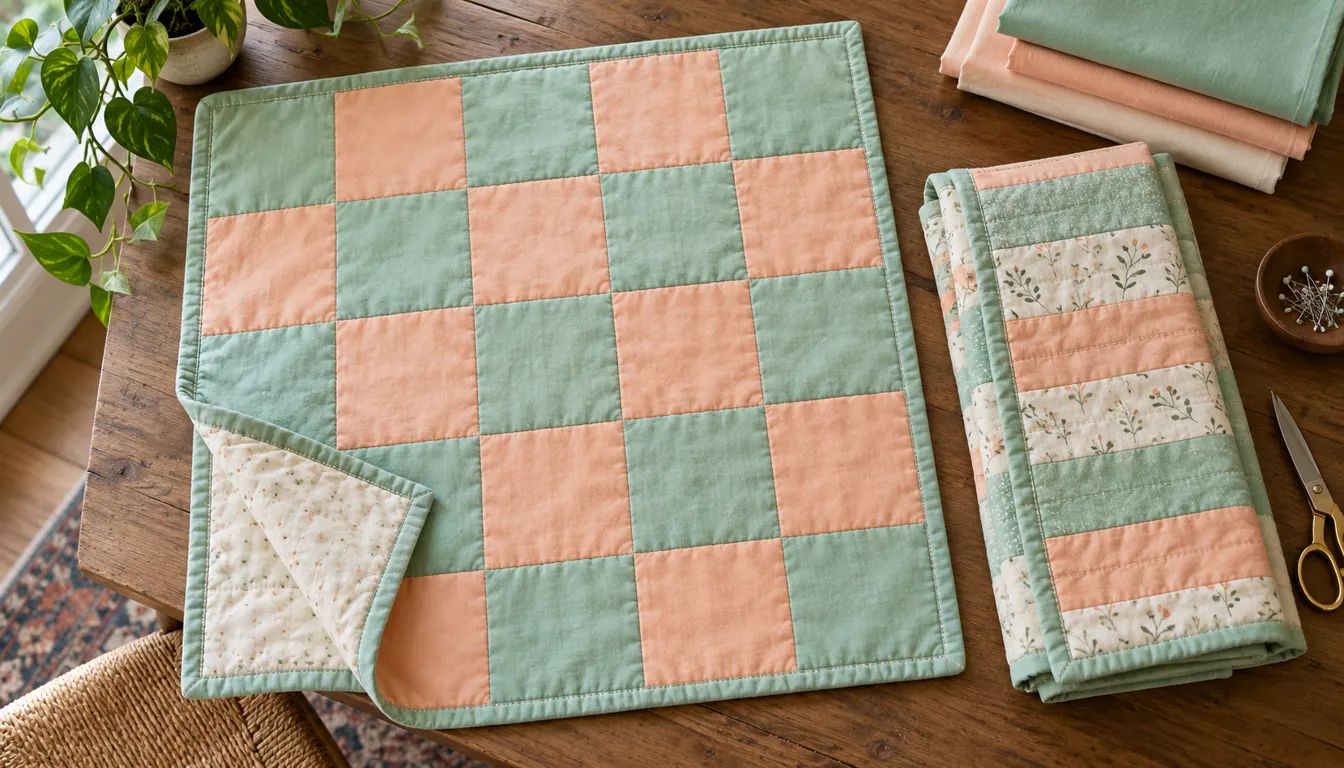
Baby quilt patterns with large squares or long bars keep the cutting simple and the seams straight. The two layouts below use a 36-square grid or five vertical bars. Compare their fabric cuts and joining steps before choosing which one to sew.
Plan these quilts for supervised use, keepsakes or display. Follow NIH safe-sleep guidance and keep loose quilts out of an infant's sleep area. Use the quilting guide to work out fabric, backing and binding yardage and choose batting before shopping.
Baby quilt patterns free to follow: a 36-square grid
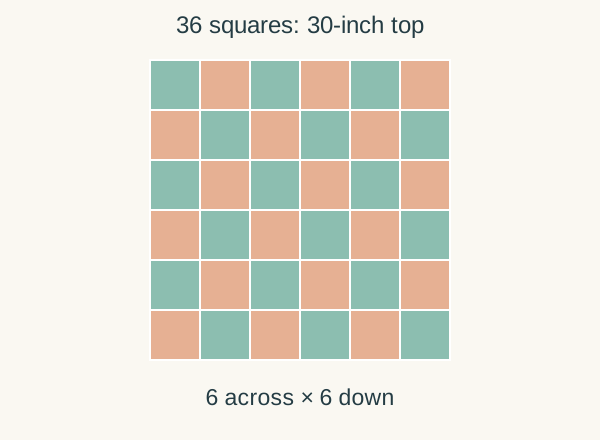
This first layout uses six squares across and six down. Each square finishes at 5 inches, giving a planned 30-inch-square top before quilting and washing. Cut 36 squares at 5 1/2 inches for 1/4-inch seams.
Six rows of six 5-inch finished squares make a 30-inch top.
Use 18 squares from each of two colors for a checkerboard. Alternate across the first row and reverse the order in the second. Repeat those two row types three times each.
Keep each row in a separate stack with its first square on top. Label the stacks one through six and keep a photo of the layout beside the machine. Check the first square in each row before sewing so the checkerboard stays in order.
The size calculation is 6 × 5 = 30 inches in each direction. Before binding, the sewn top should measure 30 1/2 inches square, including a 1/4-inch allowance along each outer edge. Check one row before joining the whole grid.
Assume a measured usable fabric width of 40 inches. Seven 5 1/2-inch squares fit across a strip because 7 × 5 1/2 = 38 1/2 inches. Three strips produce 21 squares, enough for one color's 18 pieces, using 16 1/2 inches of fabric length before preparation and cutting allowance.
A five-bar pattern with fewer intersections
For the second layout, cut five rectangles 6 1/2 by 40 1/2 inches. With 1/4-inch seams, each bar finishes at 6 by 40 inches. The five bars make a 30-by-40-inch top before quilting and washing.
Alternate two fabrics for a clear stripe effect, using three bars from one and two from the other. Keep directional motifs upright. A large print can show more clearly here than in a small square.
Measure the fabric length before cutting the bars; each needs a full 40 1/2 inches. Check the print direction as well as the dimensions. If you want motifs to line up across bars, allow enough fabric to match the repeat.
Join the five bars along their long edges to make four seams, with no crossing seams to match. Keep the fabric flat so the bars do not stretch as you sew. Test the seam on scraps, then rest the full bar length on the table while joining.
Free baby quilt patterns from publishers
Find downloadable quilt projects in the Robert Kaufman free-project library. Check each pattern's finished size and materials before saving it as your project plan.
Check whether a download includes the whole quilt or only a block. Look for seam allowance, cutting dimensions, assembly and finishing guidance. If a template is included, verify its print scale before cutting any fabric.
Save the file with the publisher name and project title. Keep its pages together so the measurements stay with the right version. Choose a different pattern if its main technique needs tools or skills you do not want to learn on this gift.
Three supplies for these straight-seam patterns
These supplies cover cutting, stitching and holding the binding. Buy what your setup needs and keep using tools that already work.
Fiskars cutting set for preparing equal squares or long bars.
Aurifil cotton thread for machine piecing and quilting samples.
Dritz binding clips for arranging the outer fold.
Ask the recipient how the quilt will be used and washed, using the baby quilt planning guide to prepare a care note. Choose fabric, batting, backing and binding with compatible care directions, and buy enough for the layout and quilting method you select.
Keep in mind: confirm the ruler and mat have room for the cuts you plan.
Product details checked October 2026
The Fiskars set includes a rotary cutter with a 45 mm blade, a ruler and a folding cutting mat. These tools help you prepare repeated straight shapes. Follow the maker's cutting and storage instructions.
For long bars, arrange a clear supported surface before opening the cutter. A small tool set does not remove the need to manage long fabric. Measure a first piece and check it against the cutting list before preparing the batch.
Keep in mind: Dove is one fixed color, so compare it with both quilt faces.
Product details checked October 2026
This Aurifil thread is 50-weight cotton in Dove. Make a sample seam and a sample quilting line with the intended needle and machine setup. A thread that blends into one fabric may become part of the visible design on another.
Keep the quilting plan within the batting maker's instructions. The pattern's patch size does not determine allowable quilting distance. Large squares can need more holding lines than their perimeter seams provide.
Dritz binding clips: check the wrap before stitching
Keep in mind: remove clips as you sew and inspect the stitched fold afterward.
Product details checked October 2026
This Dritz pack contains 30 clips for holding quilt binding. Clip the folded strip around a practice sandwich first. Check that it covers the attachment seam without pulling the edge inward.
The binding calculation guide shows how to estimate strip length after quilting and trimming. Use the actual perimeter then, since the final quilt may differ from the planned top size.
Choose the finish before the gift deadline
Test the sandwich on the machine you will use. Compare beginner quilting machines if equipment choice is still open. Keep the project size within what you can hold and move comfortably.
Inspect open seams, backing folds and binding corners before washing according to the materials' care directions. Include a care note and the intended use with the gift. Record the final dimensions after the quilt is finished.
Verdict on baby quilt patterns
Baby quilt patterns with large squares or bars keep the first project focused on accurate straight seams. Follow one cutting plan from start to finish, test the layers and leave time for binding. A fully finished small quilt is a more useful goal than a rushed difficult top.
FAQ
Which of these baby quilt patterns has fewer joins?
The five-bar layout has four long joining seams. The square grid has more short seams and intersections. Choose bars if you prefer fewer joins and have fabric long enough for the stated rectangle cuts; still test for stretching.
Are the layouts on this page free to follow?
Yes. Use either cutting plan above to make the square-grid or five-bar quilt. Keep each plan's dimensions together throughout cutting and sewing. For projects in the linked publisher libraries, read the full instructions on the publisher's website.
What should a free baby quilt pattern include?
Look for finished size, cut sizes, seam allowance, fabric requirements and assembly directions. Check whether it covers a whole quilt or just a block. Plan backing, batting and binding separately when the pattern does not supply those details.