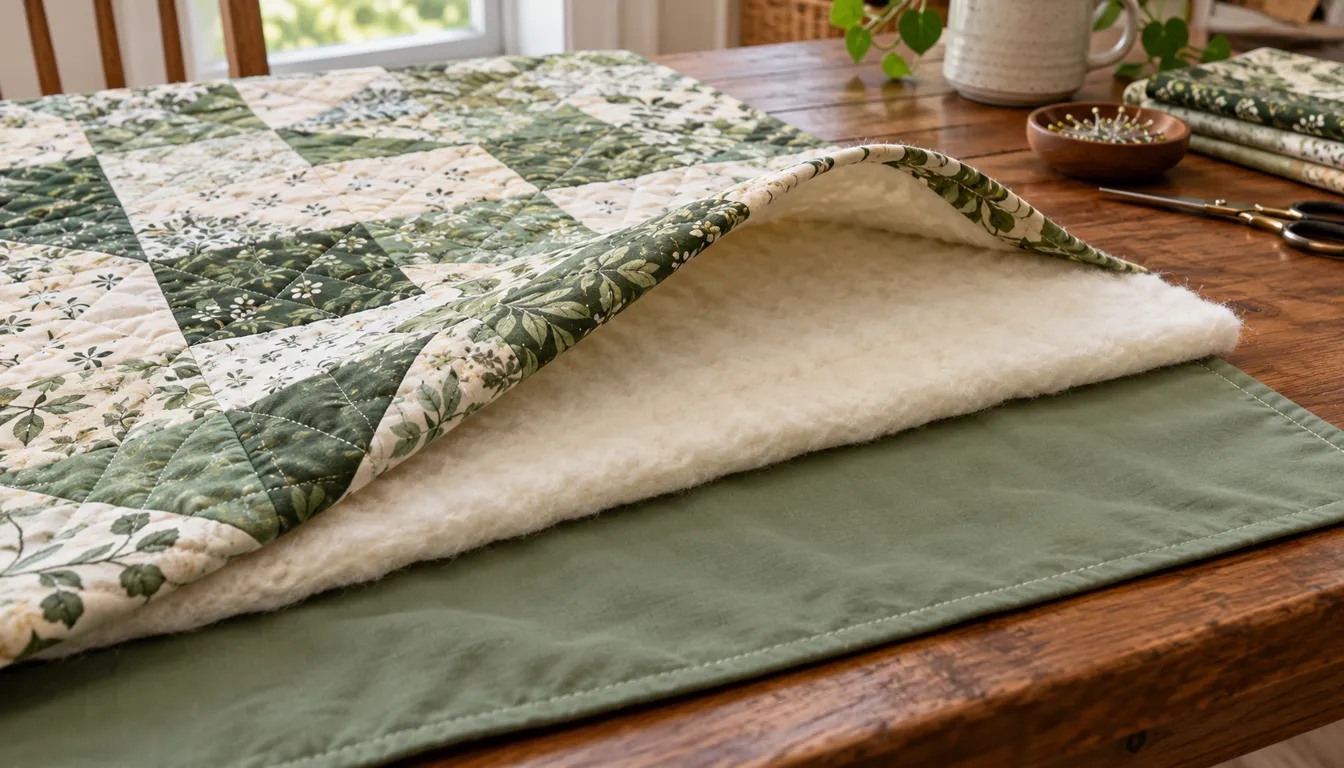
Batting Fabric: Name the Middle Layer Before You Buy
As an Amazon Associate, this website earns from qualifying purchases.
The short answer
Buy batting for the middle and backing fabric for the reverse. Check the batting's width, length and quilting instructions before ordering either a small cut or a roll.
Batting is the soft middle layer inside a quilt; backing is the cloth on the reverse. When shopping for batting fabric, check that the material is made for quilting. Read its fiber content, loft, care instructions and measurements before buying.
The quilting guide shows how the three-layer sandwich fits together. Keep top fabric, batting and backing on separate lines of your shopping list, with the measurements needed for each layer.
Batting fabric: name the job of each layer
The top carries the pieced or whole-cloth design. The batting adds the middle layer. The backing becomes the reverse surface. Quilting stitches join the layers, and binding finishes the perimeter.
Write those three names on your project sheet before choosing material. Soft white cloth, padding and stabilizer can look similar in photographs. Read what each product is made for instead of judging its use by appearance.
Fabric Warehouse's batting category includes upholstery padding and related materials. Check each product's instructions to see whether it is made for quilts. Padding for a chair may have a different thickness and require different handling from your quilt's middle layer.
Keep backing, lining and interfacing on separate lines
Backing is part of the quilt's outer surface. A garment or bag lining goes inside that project. Interfacing adds body or stiffness to fabric. A pattern may call for more than one of these materials, so check the instructions for each one before buying.
If a tutorial asks for batting and backing, buy or select both. If it asks for fusible batting, check that the product actually has that feature and follow its application instructions. A plain batting is not made fusible by pressing it harder.
For a broad fiber comparison, continue to the batting buying guide. This page helps you name the layer and format before making that narrower choice.
Compare small cuts, sheets and rolls
A small cut can cover a sampler without leaving much to store. A packaged sheet provides one larger rectangle. A roll offers repeated cuts when several projects need the same batting. In each case, check width and length against the top plus its margins.
Keep backing fabric on a separate line of the shopping list. Buying a large batting sheet still leaves you needing the fabric for the reverse of the quilt.
1. FIVEIZERO yard-length cotton for a small rectangle
Keep in mind: a yard-long piece does not have unlimited width.
Product details checked October 2026
This FIVEIZERO cotton batting cut measures 47 by 36 inches. Those are the sizes to compare with the project. Read the product's own instructions for care and stitching before layering it with the fabric.
A small cut is useful when it covers the whole needed rectangle and you have no need for a large roll. If the top plus margins is wider than the piece, extra length alone will not fix the width. Work out both sizes before ordering.
2. Warm & Natural 72-by-90-inch sheet for one larger quilt
Keep in mind: keep the full label for structure and care details.
Product details checked October 2026
This packaged Warm & Natural batting measures 72 by 90 inches. This format gives a known rectangle without a full roll to store. The Warm Company's guidance explains the named product's handling and quilting needs.
Compare the rectangle with your completed top and chosen margin. Leave the package name attached to any offcuts after trimming. It helps you name the remaining batting when planning a later small project.
3. Soft & Bright roll when the fiber choice is polyester
Keep in mind: a large roll needs storage and careful identification of offcuts.
Product details checked October 2026
The Soft & Bright polyester batting roll is 90 inches wide and 25 yards long. This is a different material and buying format from the small cotton cut. Compare it only after deciding that the product suits your desired quilt and method.
Avoid choosing a large roll just because the total area seems generous. You must store it and use its width effectively. The batting roll planning guide works through those decisions.
Work out the width and length of a yard cut
One yard is 36 inches of length. If a product is 47 inches wide and the purchase is one yard long, its rectangle is 47 by 36 inches. The area is 47 times 36, or 1,692 square inches.
For this example, suppose a small top measures 30 by 30 inches and you choose a 3-inch margin on every side. The needed rectangle is 36 by 36 inches. It fits within a 47-by-36-inch cut. Measure the batting before cutting to confirm that the usable piece is large enough.
Now suppose the top is 40 inches square with the same chosen margin. It needs 46 by 46 inches. The one-yard cut is too short even though its width reaches 47 inches. This is why buying by area alone can lead to a piece that does not fit.
Check structure and stitch spacing before substituting
Quilters Dream's cotton product page describes its no-scrim structure and quilting guidance. Other battings use different ways to hold the fibers together. Read the full materials description if avoiding a particular part matters to you.
Maximum stitch spacing belongs to the exact product. Keep those instructions with the design. If you want open areas between motifs, check their largest gaps before deciding that the batting suits the plan.
Care instructions also vary by product. A cotton product name alone does not tell you to prewash it. Read the maker's instructions and test a quilted sample with the planned fabrics before preparing a full quilt.
Make a layer card for the project
Keep a small top-fabric scrap, a batting offcut and a backing scrap with the product labels. Add the measured top size and the finishing method. That small reference makes it easier to answer questions when a class teacher or longarm service asks what is inside the quilt.
Verdict on batting fabric: buy the layer and the rectangle you need
Buy batting fabric only after you have named the layer and its needed size.
Put batting and backing on separate lines of the shopping list. Confirm that the batting suits your quilting method and covers the top plus its margins. Keep the label with the project so you can check its materials, stitch spacing and care directions as you sew.
FAQ
Is batting fabric the same as backing fabric?
No. Backing is the fabric on the reverse of the quilt. Batting sits between it and the top. Keep both on the shopping list with separate sizes and material details so that a cloth backing purchase does not leave you without the middle layer.
Can upholstery batting replace quilt batting?
Choose a product named for your quilting method. Upholstery padding can have a different loft, structure and planned use. A similar fiber name does not prove it will work as the middle layer of your quilt. Read the exact product instructions before substituting.
Is batting sold as fabric by the yard?
Some batting is sold in cut lengths, while other products come as packages, bolts or rolls. Check both the width and the purchased length. One yard describes length only, so two yard-cut products can provide very different rectangles.