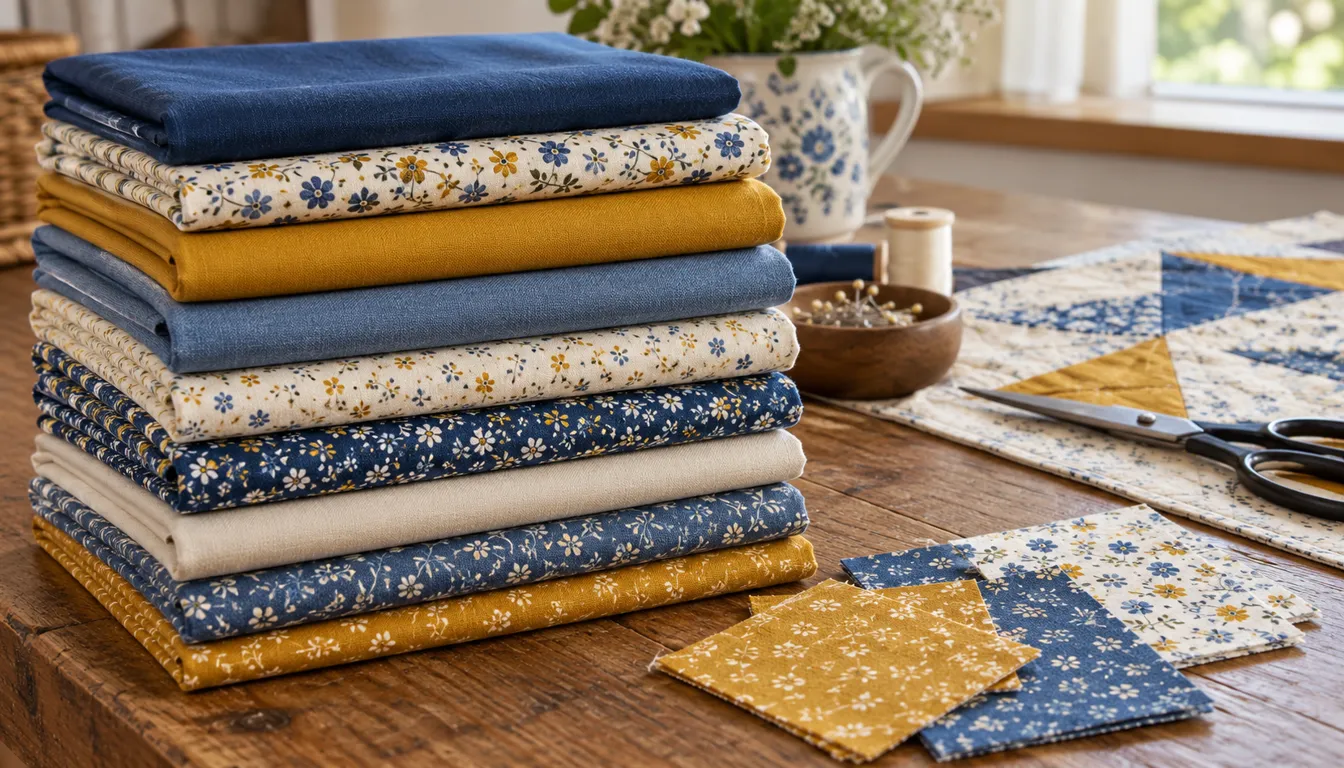
Quilt Fabric Material: Choose Cotton, Precuts and Yardage
As an Amazon Associate, this website earns from qualifying purchases.
The short answer
Measure usable fabric before assigning it to a block. Buy bundles for cuts that fit inside each piece, and calculate backing and binding separately from the top.
For a first patchwork quilt, choose cotton that meets the pattern's material instructions. Check the fiber content and care label, then measure the usable cloth before calculating cuts. Keep top fabric, backing and binding on separate lines of the shopping list.
Use our quilting guide to plan the quilt's layers and finishing supplies. Choose batting for the soft middle layer, and calculate separate fabric cuts for the top and back.
Quilt fabric material: choose by job in the design
List each fabric's job before choosing a bundle. A feature print carries a motif. A quieter background gives the pieces contrast. Binding frames the edge, while backing covers the reverse. One attractive group of prints may still need extra background or a separate back.
Robert Kaufman's Kona Cotton page gives the range's fiber content and fabric width. Check those details for the fabric you buy, then measure it after prep. Selvages and squaring can leave less usable width for your cuts.
For a simple palette, lay the candidate fabrics together in daylight. Check light and dark contrast as well as color. A small print and a solid can do different visual jobs even when both are blue. Assign fabrics to the blocks, background and borders before adding more colors.
Choose a format that fits the cutting list
Printed fat quarters offer several fabrics in small cuts. Tonal fabrics can add color without a bold print, while precut squares save some initial cutting. Measure each piece before assigning it to a block, background or border.
Check each piece in the bundle against the pattern's cutting list. You need enough fabric of each color, with room for every required cut.
Keep in mind: check each fabric’s cutting yield before assigning it a job.
Product details checked October 2026
The Craftido print bundle contains ten cotton pieces measuring 18 by 21 inches each. This gives several prints in smaller cuts. Use the real rectangle to calculate how many pieces of each color the pattern can take.
Do not treat the total bundle area as one single piece. If the design needs a long background strip or a large panel, none of the individual cuts may be large enough. Keep the bundle for jobs that fit its individual sizes.
2. Craftido tonal fat quarters for quieter color changes
Ten cotton cuts in assorted colors and tonal effects
18-by-21-inch stated size per piece
Keep in mind: a color assortment may still need a separate background.
Product details checked October 2026
The Craftido tonal bundle contains ten cotton cuts measuring 18 by 21 inches, with solid-color and tonal effects. Compare those with your feature prints to see whether the block shapes remain clear. A coordinated color group does not guarantee the contrast a particular layout needs.
Lay out a sample block before cutting the whole bundle. Photograph the setup if that helps you remember the order. Move similar tones apart when you want the individual pieces to remain visible.
3. Aubliss cotton squares for a smaller-cut starting format
Keep in mind: square sizes can vary, so measure before precise cutting.
Product details checked October 2026
The Aubliss pack contains 50 cotton squares with a nominal size of 10 by 10 inches. Individual sizes can vary. Choose this format when the planned cuts fit after inspection and any trimming. Avoid planning to use every full nominal edge without measuring.
Sort the squares by real usable size before choosing a repeated unit. A slightly smaller square may still make several useful pieces. It simply needs a cutting plan based on what you have rather than on the package headline.
Work out a fat-quarter cutting yield
Take an 18-by-21-inch rectangle and plan cuts for 6-inch squares. Three fit across the 18-inch side and three along the 21-inch side. You get nine squares and a strip measuring 18 by 3 inches, before any loss to squaring.
Sew with a 1/4-inch seam allowance so each 6-inch cut square finishes at 5 1/2 inches. A layout of six squares across and eight down uses 48 squares and finishes at 33 by 44 inches before borders. The unfinished sewn top includes the outer seam allowances.
Six rectangles at the calculated nine-square yield provide 54 squares, which is six more than the layout needs. That is a theoretical result before any loss to squaring or fabric prep. Measure and confirm the first rectangle before assigning all six to the plan.
For other layouts, see fat-quarter quilt patterns. Keep their cutting lists separate from this example; the available yield changes when the unit size changes.
Calculate yardage from usable width
Suppose you measure 40 inches of usable width and need 6 1/2-inch cut squares. Six fit across because six times 6 1/2 equals 39 inches. Seven would need 45 1/2 inches and will not fit.
For 42 squares, you need seven rows of six. Each row uses 6 1/2 inches of length, so seven rows use 45 1/2 inches. Divide that by 36 to get about 1.264 yards before allowances for squaring, prep or errors.
Allow extra length for squaring, prep and errors before buying. Recalculate the row yield if the usable width differs from the example. Losing room for just one square across each row means you will need more rows and more fabric length.
Keep large backing pieces separate from top cuts
A backing can need a much larger rectangle than any single patch. Measure the completed top and add the margin your quilting method requires. Robert Kaufman's wide backing fabric is another option for large pieces. Check its width against the full backing rectangle and read its care instructions before buying.
If you plan to use a longarm service, ask for backing needs before cutting. If you quilt at home, keep enough table space around the layers for the chosen method. A pile of leftover top squares does not by itself provide a correctly sized backing.
Prepare a sample and save the fabric identity
Follow the fabric's care directions and the pattern's prep method. Test a seam with the planned thread and needle. Keep a small scrap and the product details with the project, especially when several similar solids are involved.
Verdict on quilt fabric material: buy sizes that serve the cutting list
Choose fabric by job, check fiber and care, then calculate from real usable measurements. Buy precuts for cuts that fit inside them and yardage for larger single pieces. Keep backing and binding separate so the finished top has a clear route to a complete quilt.
FAQ
What quilt fabric material should a beginner choose?
Quilting cotton is a simple starting point when your patchwork pattern calls for cotton. Check each fabric's fiber content and care instructions. Test a seam with the thread and needle you intend to use before cutting all the pieces.
How should I measure precut squares before cutting?
Measure the pieces before planning cuts that use the full square. Aubliss squares can vary from their nominal size. Check the smallest usable square, then choose cuts that fit after trimming. Calculate the yield from those measurements.
Can one fabric bundle supply the whole quilt?
It can supply some or all of the top if the count and cut sizes fit. A pattern may still need a separate background, backing and binding. Compare each fabric’s job and quantity with the cutting list rather than judging only the bundle’s total area.