
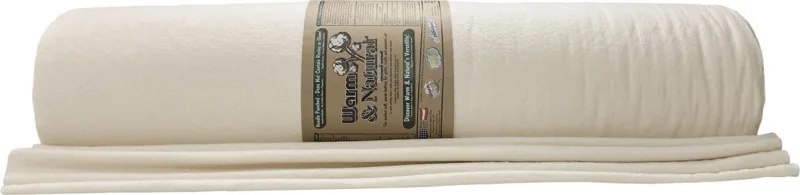
Warm & Natural batting, 72 x 90 inches
Our verdict:
Packaged cotton option
Best for quilters whose planned rectangle fits the stated sheet size.
View at The Warm CompanyKeep in mind: read the complete product structure and care label.
Quilting
The short answer
Quilt a sample before buying batting for a full project. Match the stitching gaps to the product instructions, and measure the sewn top before cutting the batting.
Warm & Natural batting, 72 x 90 inchesView at The Warm CompanyRead our analysis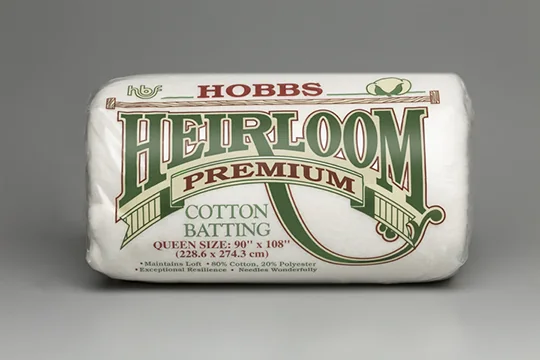 Hobbs Heirloom 80/20, 96-inch rollView at HobbsRead our analysis
 Warm Company Soft & Bright rollView at The Warm CompanyRead our analysis
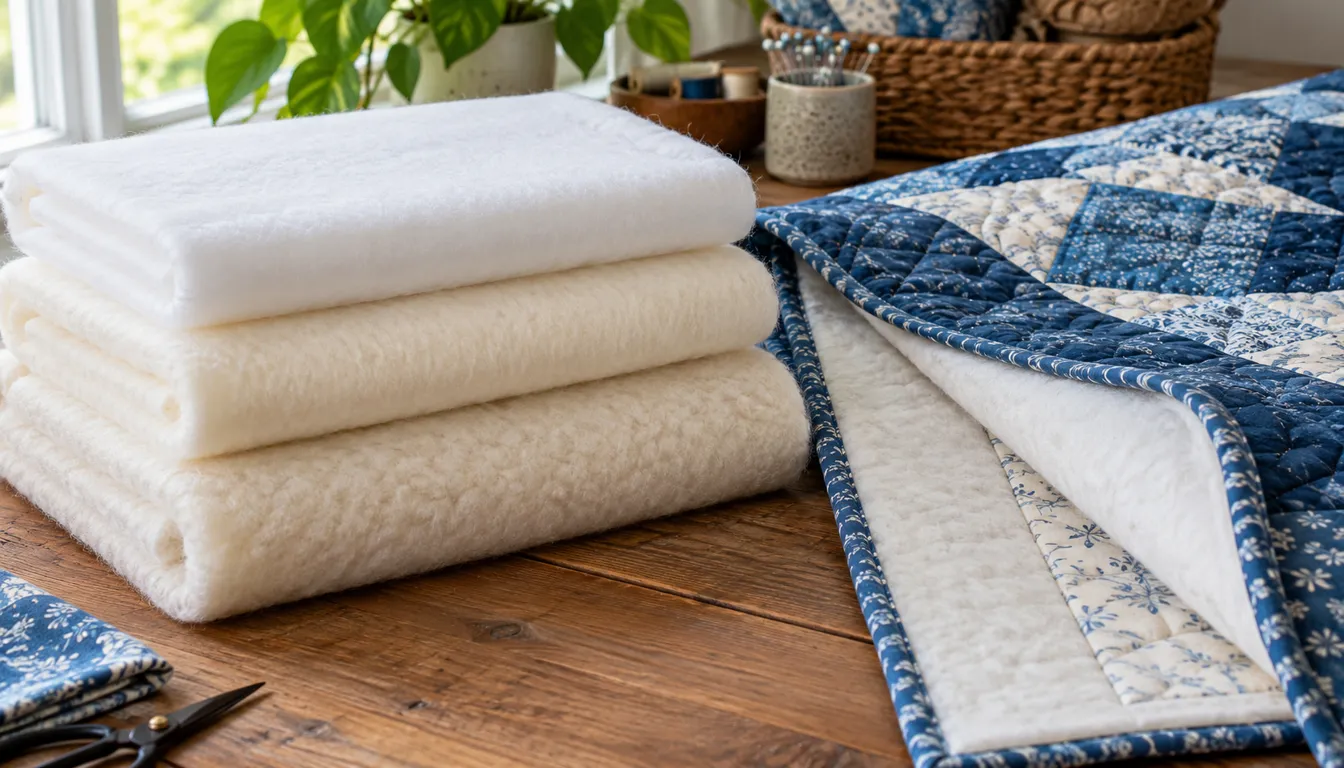
Batting is the soft middle layer in a quilt sandwich, between the top and backing. Choose it by fiber, loft, allowed stitch spacing and care instructions. Then buy a rectangle large enough for your real top and the extra margin your quilting method needs.
The quilting guide explains how the three layers become a finished quilt. Keep the batting decision with the stitching plan, because a design that leaves large open spaces must still meet the chosen product's needs.
Fiber describes the material. Loft describes its thickness or fullness. Structure tells you how the fibers are held together. Maximum stitch spacing tells you how far apart the quilting can be for that product. Read those fields together rather than choosing by fiber alone.
Quilters Dream's user guide separates fibers and lofts within its own range. It shows why a broad name like cotton or polyester is only the start of the decision. Different products within a fiber family can serve different projects.
| Choice | Useful question | Check before buying |
|---|---|---|
| Cotton | Do I like this sample's feel and weight? | Full fiber and scrim details |
| Cotton blend | Does its structure fit my stitch plan? | Blend, spacing and care |
| Polyester | Does this loft suit the desired surface? | Exact product rather than fiber alone |
| Other fibers | Does the material suit how I'll use the quilt? | Maker's use and washing guidance |
Scroll for more →
A packaged sheet can cover one quilt without leaving a large supply to store. A cotton-blend or polyester roll can suit several projects once you know you like the material. Make a quilted sample before committing to enough batting for many tops.
Choose the material first, then buy the quantity that fits your measured rectangles and storage space.
Warm & Natural batting, 72 x 90 inches
Our verdict:
Packaged cotton option
Best for quilters whose planned rectangle fits the stated sheet size.
View at The Warm CompanyKeep in mind: read the complete product structure and care label.
This Warm & Natural package measures 72 by 90 inches. Compare those real sizes with your needed cut. The Warm Company's product guidance supplies the sewing and washing instructions for the named batting.
Choose a package when one sheet fits the project and storage space is limited. Keep the label after opening it. If you later use a leftover piece, that label preserves the product identity and its stitch-spacing guidance.
Hobbs Heirloom 80/20, 96-inch roll
Our verdict:
Cotton-blend roll
Best for quilters planning several projects with the same middle layer.
View at HobbsKeep in mind: the large roll needs a cut plan and storage space.
This Hobbs Heirloom 80/20 roll is 96 inches wide and 30 yards long. Hobbs describes Heirloom 80/20 as a cotton and polyester blend with product-specific quilting and care instructions. Compare the blend as its own option rather than calling it pure cotton.
A roll is useful when you expect repeated use. It is a large commitment for a first experiment, so test a smaller sample of the same product first if you can. Our batting by the roll guide handles the cut planning.
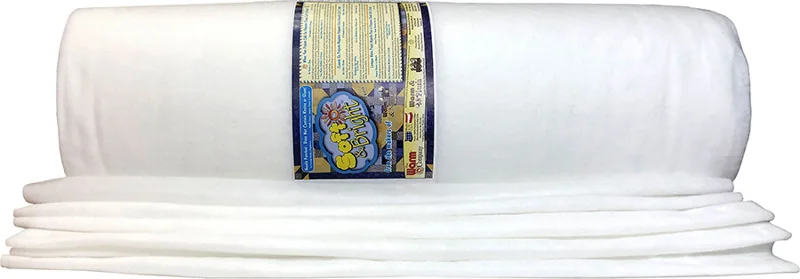
Warm Company Soft & Bright roll
Our verdict:
Polyester roll option
Best for quilters who have chosen polyester and need repeated cuts.
View at The Warm CompanyKeep in mind: confirm the chosen loft and instructions suit the project.
The Soft & Bright polyester batting roll is 90 inches wide and 25 yards long. Compare this with cotton and blends through a quilted sample. Fiber alone will not tell you how a particular stitched project feels in your hands.
Keep the product instructions with the roll. Label pieces as you cut them for different projects, including the product name and size. White offcuts can look alike, so a label helps you find their care and stitching instructions later.
An unquilted piece shows thickness but does not show the full finished result. Put a sample between your planned fabrics and stitch part of the planned design. Feel the sample in your hand and see how it folds.
For hand work, try the real needle and thread through the sample. For machine work, test the whole sandwich with the correct machine setup. The same fiber name can cover constructions that feel different when you stitch them.
If you are choosing cotton specifically, use the cotton quilt batting guide to compare scrim and purity details. Keep color in mind too, especially beneath a very pale top. Test the real layers in daylight before making the whole sandwich.
Read the maximum distance allowed between stitches on the exact product. A dense center motif does not secure a wide unstitched border. Check every area of the planned quilt, including gaps between larger shapes.
Suppose the batting permits quilting lines 3 inches apart. Across a 36-inch width, that spacing gives twelve 3-inch intervals. Mark where the first and last lines will sit, then check that the gaps at the edges also meet the product instructions.
If the desired design leaves larger gaps than allowed, switch the design or choose a suitable batting. Avoid solving the mismatch by assuming the package's limit is optional. Keep the quilted sample as a reference for the chosen spacing and feel.
Suppose your top measures 42 by 54 inches and you choose a 3-inch margin all around for your method. Add 6 inches to each size. The batting rectangle is 48 by 60 inches.
Now compare with a stated 72-by-90-inch sheet. It covers that rectangle, with leftover material after cutting. A package labeled for a bed size still needs this check because your top and quilting method may need a different margin.
If a finishing service will quilt the top, ask for its needs before cutting. The longarm prep guide covers that handoff. Learn the top's structure with beginner quilt blocks while keeping the finishing sizes separate.
Save the batting label and note the top and backing fabrics. Test washing on the quilted sample according to all materials' directions. Observe the result before deciding how to care for the complete quilt.
If you need a sewing setup for that sample, compare beginner quilting machines. A machine choice and a batting choice should meet in a real sandwich test rather than being made from separate photographs.
Choose batting with the stitching plan in hand.
Read the full label, make a quilted sample and calculate the needed rectangle. Buy a sheet that covers one quilt or a roll for several projects using the same batting. Keep the product name and care directions with the quilt so you can check them after the packaging is gone.
Batting is the middle layer placed between the quilt top and backing. Its fiber and structure affect the feel and the stitching plan. Read the exact product label for sizes, care and maximum distance between stitching lines before buying for a project.
Start with the product’s care instructions and make a sample with the real top and backing fabrics. Wash the quilted sample as directed and compare its feel and size. Keep the label so the finished quilt’s care instructions match the materials inside it.
Measure the completed top and add the margin needed by your quilting method or service. Compare those sizes with the real batting rectangle. For example, a chosen 3-inch margin adds 6 inches to the total width and length. The package’s bed-size name alone is not enough.