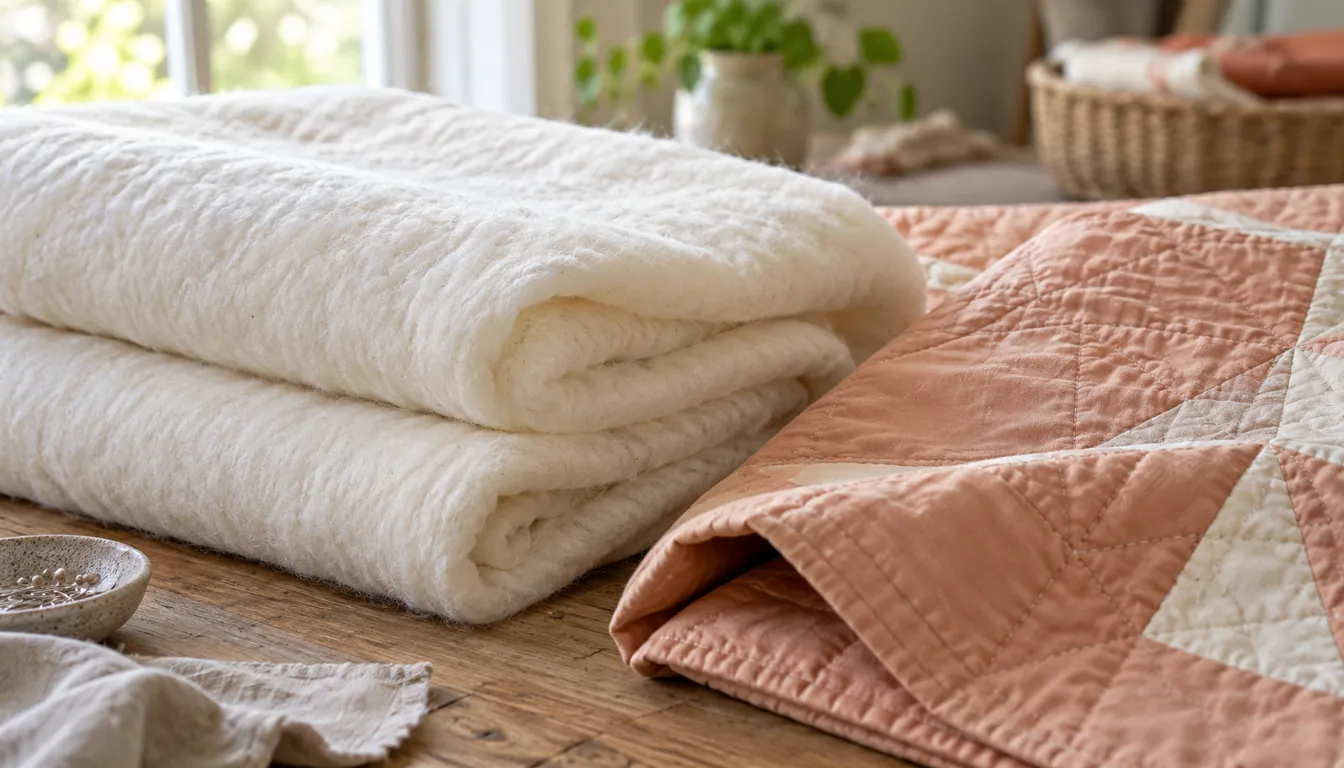
Cotton Quilt Batting: Purity, Scrim, Loft and Washing
As an Amazon Associate, this website earns from qualifying purchases.
The short answer
Test cotton batting with your quilt fabrics before buying a full sheet or roll. Save the label and washed sample so you can repeat the result and follow its care directions.
Read the full label before buying cotton quilt batting. It may be all cotton, cotton held together with a scrim, or a blend with another fiber. Scrim is a thin mesh inside some battings. Quilt and wash a sample to check its feel and surface with your fabrics.
The quilting guide explains the complete sandwich. For a broader comparison with polyester and other fibers, use the batting guide. Here the focus is reading cotton details and making a useful sample.
Cotton quilt batting: read beyond the fiber name
The word cotton can describe the main fiber without describing every supporting part. Fairfield's Toasty Cotton page describes cotton batting with a slight synthetic scrim. That is useful detail when comparing complete constructions.
Quilters Dream Cotton contains cotton without scrim, resin or glue. When comparing materials, read the full label and keep it with the quilt. Two products with cotton in the name may have different fiber content.
A blend can also suit your quilt. Read its own label. A cotton-polyester blend is a valid project choice when it suits your needs, but it is a different purchase from wanting cotton alone.
Compare material content before package size
Start with the fiber and supporting layers you want. Then compare a small cotton cut with a larger packaged sheet. A cotton-polyester blend is another option when you are comfortable including both fibers. Keep that choice separate from the amount you buy.
Use a small sample to check handling and washing before choosing enough material for a full quilt or several projects.
If every fiber must be cotton, check the complete materials statement before choosing any product.
Keep in mind: check the exact product’s quilting and washing directions.
Product details checked October 2026
The FIVEIZERO cotton cut is 47 inches wide and one yard long, or 47 by 36 inches. Compare both measurements with your sampler or compact top. The batting must also cover the extra margin needed for your quilting method.
Use an offcut to test both hand and machine work if you are deciding between them. Keep the sample simple enough that you can judge the layers rather than a difficult design. Label the result with the product name.
Keep in mind: read the complete structure if every part matters to you.
Product details checked October 2026
This Warm & Natural sheet measures 72 by 90 inches. Check that it covers the top plus your quilting margins. The Warm Company's product guidance gives the care and quilting instructions. Use those measurements and directions when buying; a bed-size name alone does not tell you whether the sheet fits.
If you want to avoid every synthetic part, ask the maker for the full current composition before choosing. The word cotton alone is less precise than a complete materials statement. Keep that question separate from whether you like its quilted feel.
3. Hobbs Heirloom 80/20 as a clearly labeled blend comparison
Keep in mind: the blend includes polyester, and the roll needs room for storage.
Product details checked October 2026
This Hobbs Heirloom 80/20 roll measures 96 inches wide by 30 yards long. The batting contains 80 percent cotton and 20 percent polyester. Hobbs' product page gives its stitch-spacing and care instructions. Try it if you want cotton blended with polyester.
The 30-yard length can cover several projects, but it needs storage space and a cut plan. For a first quilt, try a smaller piece of the same batting before buying a roll. Choose the sheet or cut length that covers your top and quilting margins.
Choose loft by the project and method
Cotton products can come in several lofts. Quilters Dream's range separates lighter and heavier versions, with exact guidance for their uses. Read the named loft details rather than assuming that cotton always means one thickness.
For hand quilting, try the exact layers with the thread and needle you plan to use. For machine quilting, test handling and the stitched result on the real setup. A loose unquilted scrap does not show all of the finished behavior.
Think about the quilt's purpose. A light throw, a wall piece and a deliberately weighty quilt can call for different choices. Describe the desired result in plain words before choosing the loft, then keep a quilted sample that shows what you mean.
Cotton batting for quilts with pale fabrics
Put the real batting under the palest fabric in the top. Check it in daylight and under the room light where you sew. Keep the backing under it too so that the test represents the full sandwich.
Hobbs warns that the natural color of Heirloom 80/20 may show through light fabrics. Check the batting beneath every pale patch in your top. A dark print can hide a tint that is visible through a pale solid.
If the color changes the top in a way you do not want, compare a suitable white option from the maker's range. Test the replacement rather than assuming a color name predicts the result through every fabric.
Measure a washing sample instead of guessing
Make a labeled quilted sample and measure it before washing. Follow all material care directions, then measure the dry sample again. Record the wash and dry method as well as the sizes.
To calculate shrinkage, suppose one side of a sample measures 20 inches before washing and 19 1/2 inches afterward. That side lost 1/2 inch. Divide 0.5 by 20 and multiply by 100: it shrank by 2.5 percent. Measure the other side too, since the results may differ.
That figure describes your sample and routine, not a general cotton shrinkage rate. The test includes the fabrics and stitching too. Use the result to decide whether you like the texture and care routine for the complete project.
Keep the top size and finishing margin separate
Measure the sewn top, then add the margin your chosen method requires. If a top measures 36 by 48 inches and your selected method needs 2 inches on each side, the batting cut becomes 40 by 52 inches. Replace that margin if your quilter asks for another one.
For a crib quilt project, keep its size and use plan with the material record. If you are choosing equipment, beginner quilting machines can help you prepare a manageable first sandwich.
Verdict on cotton quilt batting: choose cotton with the full details in view
Choose cotton quilt batting from its full label and a quilted test.
Check fiber, scrim, loft and care together. Test the palest fabrics over the real batting and wash a quilted sample. Choose the batting size only after the top and finishing method are clear, then keep the label for the finished quilt's care record.
FAQ
Is cotton batting always 100 percent cotton?
Check the full materials statement. Some cotton battings contain a synthetic scrim, a thin mesh that holds the fibers together. Others blend cotton with another fiber. Quilters Dream Cotton has no scrim. If you want cotton alone, check every material in the product before buying.
Should I prewash cotton batting for quilts?
Use the instructions for the exact product. Quilters Dream does not recommend prewashing Dream Cotton, while other makers publish their own care methods. Test a quilted sample with your top and backing so that the washing result reflects the whole sandwich.
Does cotton batting shrink by one fixed amount?
No single number describes every cotton batting and care routine. Use the maker’s stated guidance for the product and wash method. The top, backing and quilting can also affect a finished sample. Measure a test before and after washing instead of predicting from fiber alone.