Quilting Needles: Hand Betweens and Machine Needle Choices
As an Amazon Associate, this website earns from qualifying purchases.
The short answer
Keep needle packets labeled by family and size. Try hand needles on a sample, and confirm the machine's required needle system before fitting a new one.
Quilting needles come in two separate families: hand needles, often called betweens, and machine needles. First choose the family for your technique. Then match the hand needle to your grip and thread, or the machine needle to its needed system, fabric and thread.
Start with the quilting guide if you are choosing between hand and machine finishing. The needle follows the method; buying a packet labeled quilting does not decide how the quilt will be stitched.
Quilting needles: read the family before the size
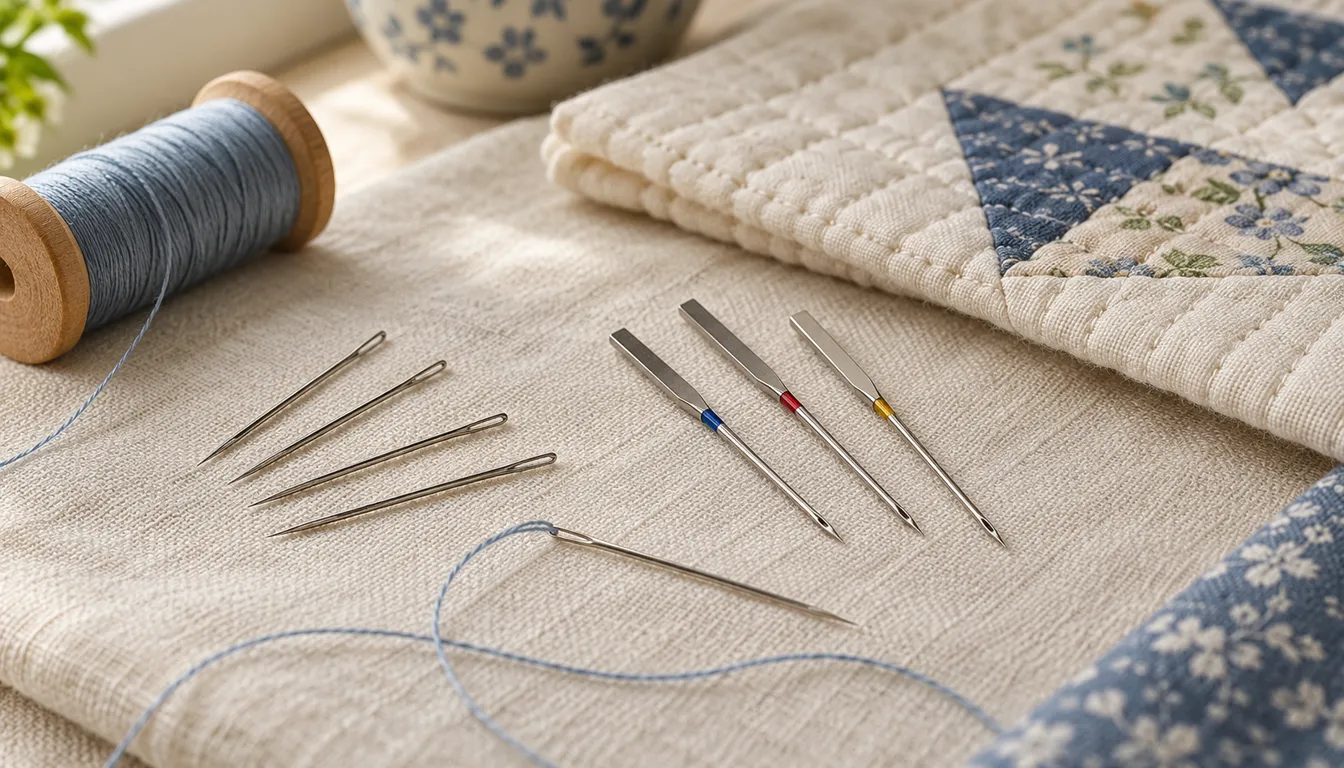
A hand needle is held and pulled through the work. A machine needle fits into the needle bar as the manual directs. Both packets may say quilting, so check which kind of sewing each needle is made for before comparing sizes.
Hand quilting betweens and machine quilting needles use different size systems. Keep their packets separate and check which family the project needs. SCHMETZ's needle guide explains machine needle types and sizes. Use the appropriate source for the family you are buying.
Keep packets intact until you have recorded the size and type. Loose needles in a mixed pin cushion can be difficult to name later. A labeled case saves you from guessing when you return to a half-finished project.
Choose a hand-needle packet for your next sample
An assortment lets you compare several sizes. A single-size packet repeats a choice you already like. A big-eye design gives you another threading option to try. Keep the thread and quilt layers the same during the comparison so you can judge the needle itself.
Try several hand needles on the same quilt sandwich before buying more. Choose a size that is easy to thread and comfortable to grip, then keep its labeled packet with the project.
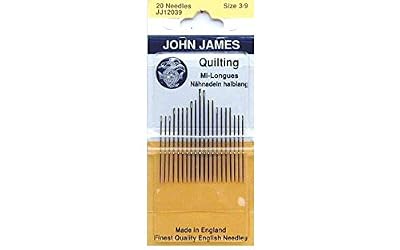
1. John James assorted betweens for a first comparison
Keep in mind: these are hand needles, not machine needles.
Product details checked October 2026
This John James assortment contains 20 hand quilting betweens in sizes 3 through 9. An assortment gives you several sizes to try with one sample sandwich. Keep each size labeled during the trial so that the comfortable choice can be named afterward.
Try threading and sewing a short line with each candidate. Judge how it feels in your hand and how it passes through the real layers. A very small needle is not by itself the right first choice if you struggle to thread or control it.
Keep in mind: a single-size pack offers no size comparison.
Product details checked October 2026
This packet contains 20 size 8 hand quilting needles. Choose a single-size packet after a sample has shown that the size works for your thread and technique. Keep a few with the project so that a lost or damaged needle does not stop the session.
Do not assume the number describes the eye size alone. Check the packet for the needle type as well as the size. If threading is the main difficulty, compare the real needle design as well as its size label.
3. Big-eye size 10 for a different threading choice
Keep in mind: the thread and quilt sandwich still need a trial.
Product details checked October 2026
This packet contains 20 size 10 big-eye hand quilting needles. Try this option if threading is difficult with your current needle. Use the thread you intend to sew with, then check how the needle passes through the quilt layers.
Try a short piece of the real thread instead of judging from an empty eye. Then stitch through a scrap sandwich with the same seam bulk as the project. A sample over plain fabric alone may feel different from crossing a pieced seam.
Machine needles: system, type and size are three checks
Start with the system needed by the machine manual. Then choose the type for the task and a size suited to the thread and fabric guidance. SCHMETZ separates those decisions rather than treating “quilting needle” as a universal fit.
Its needle guide describes a tapered quilting needle for piecing and machine quilting. It also describes other point types used for different fabrics and tasks. Follow the maker's guidance and test the result on the real layers.
Check the needle size for each quilt's materials. Thread thickness, fabric and the machine can affect the choice. The quilting thread guide explains how to read the spool's weight and needle guidance before trying a sample.
A simple hand-needle comparison record
Make a scrap sandwich using the fabric and batting for your quilt. Choose three candidate hand needles and sew one short sample line with each. Label the lines A, B and C and write the needle size next to each letter on paper.
Record three observations per line: threading, grip and passage through the layers. That gives three times three, or nine observations to compare. The purpose is a repeatable choice, not a score that proves one needle is right for everyone.
Keep the most comfortable sample with the project. If you switch the thread later, repeat the threading check. If you switch the batting, try the new layers before assuming the same hand movement will feel the same.
Check stitch trouble before changing several settings
According to SCHMETZ, damaged or worn machine needles can cause skipped stitches and thread damage. Inspect the needle and follow the manual's replacement procedure before adjusting several settings at once. Stop if the needle strikes a foot or plate.
Do not pull the quilt to force it through the stitch. Add table space and check the technique setup. Machine quilting for beginners starts with a small sandwich so that handling and stitch problems are easier to separate.
For longarm equipment, use the SCHMETZ longarm system warning and the exact machine manual. Keep longarm consumables apart from domestic ones if both machines share the room.
Match the needle purchase to the sewing plan
Choose hand betweens for hand quilting and machine needles for your exact sewing setup. The quilting sewing machines guide compares equipment for piecing and quilting. If you are buying your first machine, start with the beginner machine guide.
Verdict on quilting needles: label the needle that works
Keep quilting needles labeled by family and size.
Try an assortment for hand work, then buy the single size or eye style that suits your sample. For a machine, confirm system, type and size before fitting the needle. Keep the successful needle and thread details together so the next session starts from a known combination.
FAQ
Are quilting needles the same for hand and machine sewing?
No. Hand quilting needles have an eye and a shaft you hold and pull through the layers. Machine needles mount in the machine and must match its needed system. Read the package before choosing by size number, because the numbering belongs to different systems.
What size quilting needle should I use?
For hand work, try a size you can thread and move comfortably through your real sandwich. For machine work, use the manual and thread maker’s guidance. SCHMETZ says to choose size for thread thickness and type for the fabric application. Test before stitching the quilt.
Can domestic quilting needles fit a longarm?
Some longarms require a different needle system. SCHMETZ advises checking the operating instructions for flat or round shanks and the needed system. The word quilting on a package is not enough to establish fit. Keep the exact system code with your machine supplies.