
Our verdict:
Domestic format
Best for beginners who need quilts and ordinary sewing from one setup.
View at BrotherKeep in mind: a wide table helps carry fabric but leaves the same arm opening.
Quilting
We may earn a commission from some links on this page.
The short answer
Start with a domestic machine for varied sewing. Try sit-down and frame quilting before buying a system that needs its own space and loading routine.
Brother CS7205View at BrotherRead our analysis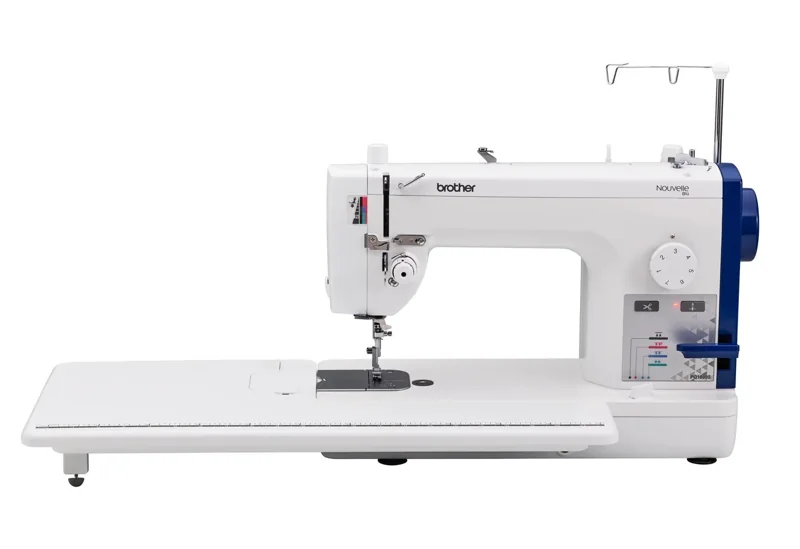 Brother PQ1600SCheck price at SewingmachinesplusRead our analysis
 Janome Memory Craft 6650Check price at SewingmachinesplusRead our analysis
Choose a machine format by how you want to handle the quilt. On a domestic or sit-down machine, you move the fabric under the needle. On a frame-mounted longarm, you move the machine over the layers. That difference matters more to the room layout and your sewing routine than the machine's stitch count.
Start with the quilting project guide if you are still deciding what to make. Your first top may need only ordinary straight seams. The equipment choice becomes more exact when you decide how to quilt its layers.
On a domestic machine, you move fabric across a fixed sewing bed. For many sit-down quilting systems, you also move the quilt under a fixed head. With a frame-mounted longarm, the layers are held on the frame while you move the machine over the exposed section.
Baby Lock's quilting category and its separate longarm category show why these formats deserve separate shopping lists. Choose the format first. Then read the machine and frame specs.
Ask who will move the quilt and where the excess fabric will go. That question is often more helpful than comparing stitch counts. It also explains why a machine with a large table can still feel crowded during a large project.
| Format | Fabric handling | Main decision |
|---|---|---|
| Domestic | Fabric moves over a fixed bed | One machine for several sewing jobs |
| Dedicated straight stitch | Fabric moves over a fixed bed | Focused work beside another machine |
| Sit-down quilting | Quilt moves on an extension table | Control of layered work |
| Frame-mounted longarm | Machine moves over loaded layers | Floor space and loading workflow |
Scroll for more →
A domestic machine can share one desk with other sewing jobs. A dedicated straight-stitch model makes sense when another machine handles varied stitches. A larger flatbed needs a desk that supports the quilt beyond the machine.
For a specialist frame system, plan a dealer trial and measure the room before choosing a model. Include loading and access space in the plan.
Our verdict:
Domestic format
Best for beginners who need quilts and ordinary sewing from one setup.
View at BrotherKeep in mind: a wide table helps carry fabric but leaves the same arm opening.
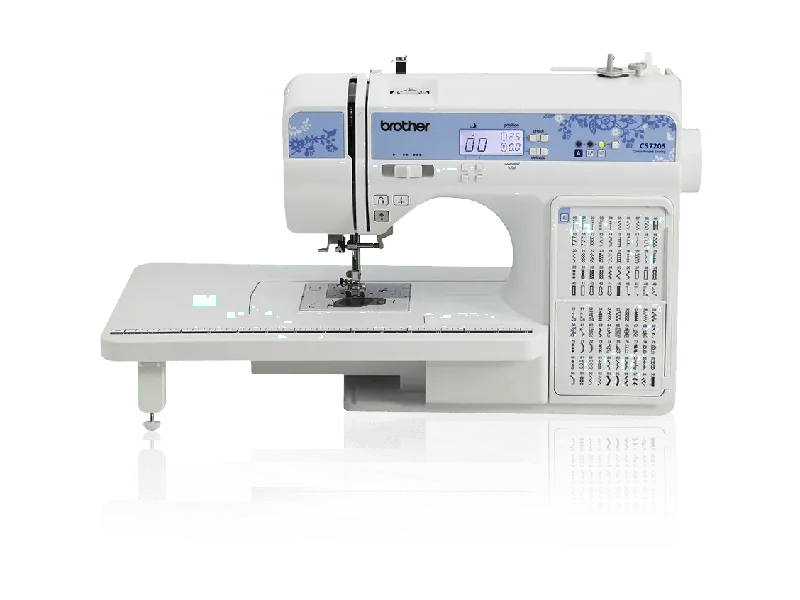
The Brother CS7205 is a mixed-use example with a wide table and utility sewing functions. This direction lets you piece blocks, make binding and return to clothing repairs without buying a second stitch system.
It suits a room where equipment must earn its space through several jobs. Plan a place for the quilt beside the machine and keep the cutting area clear. A domestic purchase can grow with you through better setup and practice, even when a later project goes to a longarm service.
Our verdict:
Straight-stitch format
Best for quilters who already have another machine for varied stitches.
Check price at SewingmachinesplusKeep in mind: it does not replace zigzag and buttonhole functions.
Brother describes the PQ1600S as a straight-stitch sewing and quilting machine. Its published controls include adjustable feed-dog height and presser-foot pressure. Those features belong on the list when you want a focused sewing station.
The narrower stitch job is a real trade-off. If you only have room for one machine and need stretch stitches or buttonholes, keep a broader domestic option in the comparison. Buying a dedicated machine works better when you already know which tasks stay with the other one.
Our verdict:
Roomier domestic bed
Best for sewers who need working room without giving up utility stitches.
Check price at SewingmachinesplusKeep in mind: the surrounding table still has to carry the quilt.
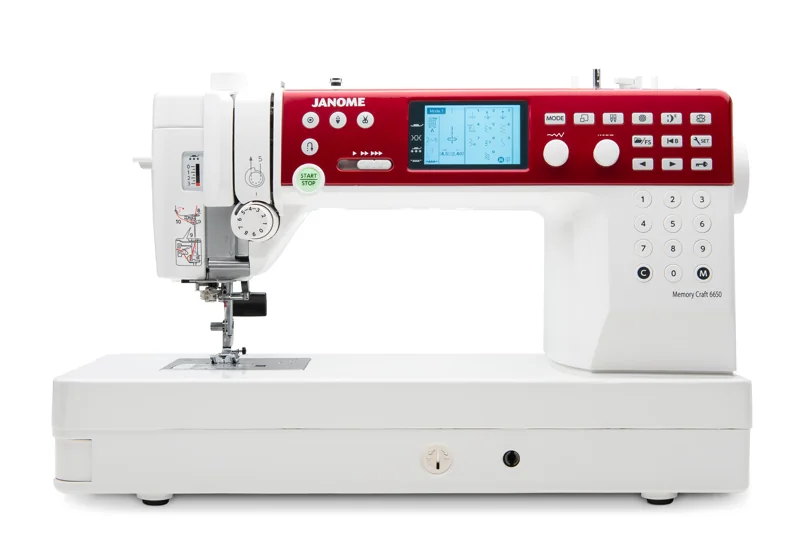
The Janome MC6650 has a 10-inch flatbed and 170 built-in stitches. Compare its working room with your current machine, then check the footprint and the full desk layout before choosing it.
Compare this route when the quilt crowds the right side of the needle but you still want to make the whole project on a household machine. Ask to handle a sample with batting inside. A folded top alone gives a poor sense of the bulk you will manage later.
A sit-down quilting machine and a standing frame system ask different things of your hands and body. Book a lesson or trial that includes loading or arranging the quilt, stitching a sample and changing direction. A few decorative swirls on an already prepared demo quilt show only part of the job.
For a frame, inspect the space needed behind it as well as in front. Ask how the quilt advances and how much area remains available as the take-up roll grows. For sit-down work, ask how the rest of the quilt is supported and how you move it between sections.
Our long arm quilting machine guide covers the frame buying questions. The longarm guide explains the finishing-service workflow if you want the result without owning the equipment.
Use the measurements for the exact setup you plan to buy. To work out the space, add access clearances to the frame dimensions. For example, a frame 10 feet long and 3 feet wide with 2 feet at each end and 2 feet at the front and back takes up a clear rectangle of 14 by 7 feet.
That is 98 square feet, calculated as 14 times 7. For your room plan, use the frame measurements and clearances in the maker's installation instructions, plus any extra access you need. Mark that rectangle on the floor before ordering.
Check doors, stairs and the path into the room too. A setup can fit in its final position and still be difficult to deliver. Ask who assembles the table or frame, and what training comes with the exact purchase.
The quilting needle guide separates hand needles, domestic machine needles and specialist systems. Write the required needle system beside the machine's full model code. Add compatible bobbins and feet to the same sheet so you can check each part before buying it.
If you are learning from scratch, compare beginner quilting machines before moving into frame equipment. Learn the piecing task first, then decide how much finishing equipment you want to own.
Stay with a domestic format for a flexible first sewing desk. Add a straight-stitch station for repeated focused work. Try sit-down and frame quilting before choosing a specialist system. A good purchase matches the work you want to repeat, the space you can give it and the setup you are willing to learn.
Some are ordinary domestic machines with quilting accessories. Others are specialist machines for stitching layered quilts. Read the stitch list and the table or frame details together. The category name alone does not tell you whether the machine can make buttonholes or needs floor space for a frame.
A frame-mounted longarm stitches the quilt top, batting and backing together after they are loaded on its frame. Use a domestic machine to piece the blocks and assemble the top first. Ask the maker to show the exact table or frame setup when comparing specialist machines.
Begin with a small quilt and learn how the layers behave. A frame adds loading and space needs to the sewing task. A class or rental session can help you judge that workflow before buying equipment that needs a permanent place in your home.