5 Best Computerised Sewing Machines: How They Work, Pros and Cons in 2026
As an Amazon Associate, this website earns from qualifying purchases.
The short answer
A computerised sewing machine is worth it if you want one-step buttonholes, needle up/down, speed control and a wide stitch library. The Brother CS7000X and Janome JW8100 are popular all-rounders; a mechanical machine is still simpler and cheaper to repair.
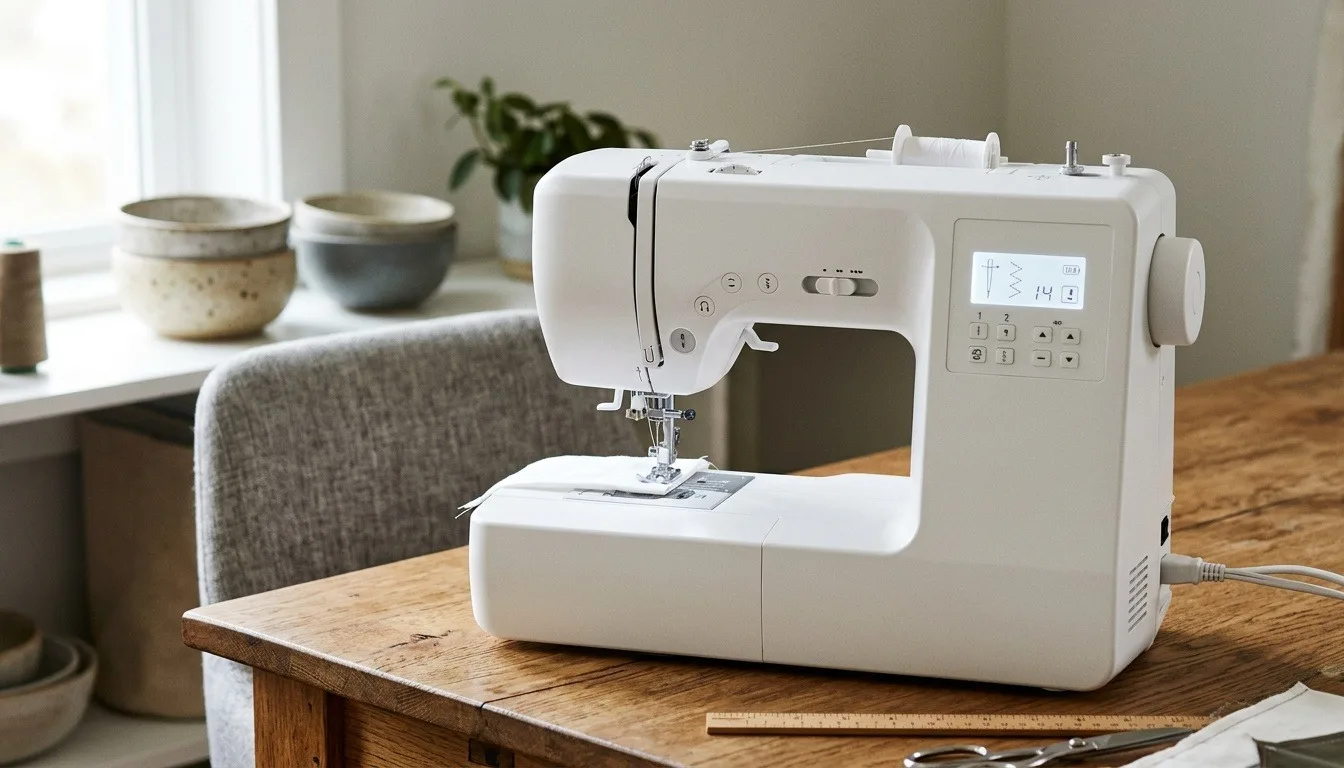
A computerised sewing machine uses a circuit board, buttons and a small screen to pick and control stitches. A mechanical machine uses dials instead. The board opens up features that a dial machine can't easily offer. Examples are one-step buttonholes sized to your button, needle up/down and hundreds of stitches.
This guide compares five widely sold models by their makers' listed features. Then it explains how these machines work, which features are worth paying for and the trade-offs. We have not tested these machines ourselves.
#1. Brother CS7000X: best quilting-ready all-rounder
70 built-in stitches, including quilting and heirloom stitches
7 one-step auto-size buttonholes
Metal frame with a wide table and 10 sewing feet
Automatic needle threader and drop-in top bobbin
Keep in mind: more menus to learn than a simple dial machine.
Product details checked September 2026
Brother lists 70 built-in stitches. They include utility, decorative, heirloom and quilting stitches. It has 7 one-step buttonholes that size themselves, an automatic needle threader and a drop-in top bobbin. The frame is metal. The wide table and extra room beside the needle suit quilts.
#2. Janome JW8100: best 100-stitch machine with quilting extras
Extension table, even feed foot and quarter-inch foot included
Start/stop button, speed slider and needle up/down
Keep in mind: more features than a first-time sewer strictly needs.
Product details checked September 2026
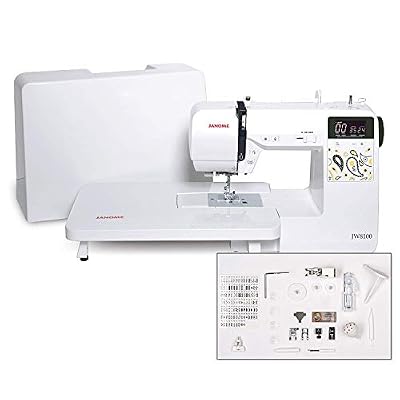
Janome lists 100 built-in stitches and 7 one-step buttonholes. It has an LCD screen, a start/stop button, a speed slider and needle up/down. It also has a built-in threader and a drop-in bobbin that takes Class 15 bobbins. For quilting, it ships with an extension table, an even feed foot and a quarter-inch foot.
Keep in mind: fewer decorative stitches than larger computerized models.
Product details checked September 2026
The MOD-30 is a smaller step into computerized sewing. Janome lists 30 built-in stitches and 3 one-step buttonholes. It has a one-hand needle threader and a top-loading bobbin with a clear cover.
The screen is backlit. You get start/stop, a locking stitch and needle up/down buttons. It also has a free arm, and you can drop the feed dogs.
#4. SINGER Quantum Stylist 9960: best for the largest stitch library
13 one-step buttonhole styles and a lettering font
13 presser feet, including a walking foot
Speed control and start/stop button
Keep in mind: the large stitch menu takes time to learn.
Product details checked September 2026
This one has the largest stitch library in the list. SINGER lists 600 built-in stitches and 13 one-step buttonhole styles. You also get a lettering font, mirror imaging and stitch stretching.
It has an automatic needle threader and a top drop-in bobbin. A start/stop button works with the speed control. It comes with 13 presser feet, including a walking foot.
#5. Brother SE700: best for sewing plus embroidery
103 built-in sewing stitches and 135 built-in embroidery designs
4 x 4 inch embroidery hoop
Color touch screen with wireless LAN
Keep in mind: the 4 x 4 inch hoop limits design size.
Product details checked September 2026
The SE700 does embroidery as well as sewing. The listed bundle has 103 built-in sewing stitches and 135 built-in embroidery designs. It comes with a 4" x 4" embroidery hoop and a color touch screen. You can send designs to it over wireless LAN.
Factors to consider when choosing a computerised sewing machine
Start with your projects. Garments need good buttonholes and stretch stitches. Quilting needs needle down, speed control and space to the right of the needle.
Ignore the biggest number. A machine with 100 good stitches is not worse than one with 600 if you will only use 20.
Check the feed system. More feed dog sections and an even feed foot help with layers.
Look at the workspace. The distance from the needle to the machine body limits how big a quilt you can handle comfortably.
Plan for service. Ask where the nearest technician for that brand is.
On a mechanical machine, a dial moves cams and levers that set the stitch shape. On a computerized machine, you pick a stitch with a button or a screen. The board then drives small motors.
They move the needle bar from side to side and set the feed. The basic way the stitch forms is the same as on any lockstitch machine. The needle, hook, bobbin and feed dogs all work together.
Computerised sewing machine features worth paying for
Feature
What it does
Who benefits
One-step auto-size buttonhole
Measures the button in the foot and sews the whole buttonhole
Garment sewers
Needle up/down
Stops with the needle down so you can pivot at corners
What is the difference between a computerised and a mechanical sewing machine?
A mechanical machine uses dials and cams to set stitches. A computerised machine uses a circuit board, buttons and a screen, and small motors can control stitch width, length and needle position, which makes features like one-step buttonholes and needle up/down possible.
Are computerised sewing machines harder to repair?
Mechanical parts such as the hook, feed dogs and tension work the same way on both. Faults in the circuit board or screen need a technician and parts from the maker, which can cost more than a mechanical repair.
Is computerised or computerized the right spelling?
Both are used. Computerised is the British spelling and computerized the American one. The machines are the same.
Do I need a computerised machine for quilting?
Not strictly, but features like a speed slider, needle down, a start/stop button and a wide table make machine quilting easier.